Anti-aging treatment in Brasília — regenerative protocols for executives
A structured approach to ageing that prioritises tissue regeneration over volume addition — designed for professionals who require discreet results and predictable recovery windows.
Book ConsultationWhat does regenerative anti-ageing mean in clinical practice?
Regenerative anti-ageing is the discipline of restoring the biological substrate of youthful appearance — collagen architecture, dermal hydration, and structural support — rather than masking its loss with temporary fillers. The distinction matters clinically. Volumising agents address the consequence of ageing; regenerative protocols target the mechanism.
The biological basis is well established. Intrinsic ageing reduces fibroblast activity and collagen synthesis from the third decade onward; extrinsic factors — ultraviolet radiation, metabolic load, chronic stress — accelerate dermal matrix degradation. The result is not simply volume loss but a qualitative change in the tissue itself: thinner dermis, reduced elasticity, impaired wound response.
Poly-L-lactic acid (PLLA) and calcium hydroxylapatite (CaHA) are the two most extensively studied biostimulatory agents. A systematic review by Goldberg et al. (Dermatologic Surgery, 2020) documented histological evidence of new collagen deposition following CaHA injection, with tissue-quality improvements persisting beyond 12 months. PLLA has an analogous mechanism, acting as a scaffold for fibroblast activation and sustained collagen synthesis over a 6-9 month remodelling window.
At INTI clinic in Lago Sul, Brasília, Dr. Thiago Perfeito structures regenerative protocols around this evidence base, integrating biostimulatory injectables with energy-based devices and, where clinically indicated, autologous fat grafting — the only truly permanent volumising and regenerative option available.
Which patients benefit most — and when does treatment make clinical sense?
Regenerative anti-ageing is not age-dependent; it is tissue-state dependent. The critical question at consultation is whether the dominant problem is structural (bone resorption, fat-compartment redistribution, ligament laxity) or qualitative (dermal thinning, collagen loss, surface texture). Most patients presenting from their mid-thirties onward show both, in varying proportions.
Clinical indications addressed within a regenerative protocol:
- Early to moderate skin laxity of the mid-face, neck, and décolletage
- Volume loss in malar, temporal, and periorbital regions where tissue quality is the primary deficit
- Post-weight-loss or post-pregnancy changes to facial and body contour
- Skin-quality decline associated with perimenopausal hormonal shifts
- Preventive structural maintenance in patients aged 35-50 with strong family history of accelerated facial ageing
- Combination with surgical planning — biostimulation 6 months prior to or following lifting procedures to optimise tissue quality
Contraindications and clinical limits:
- Active or recent inflammatory skin conditions at the treatment site
- History of PMMA, biopolymers, or liquid silicone injections in the target area — these preclude safe biostimulatory treatment and are considered contraindicated at this practice
- Pregnancy or active breastfeeding
- Uncontrolled autoimmune conditions or immunosuppressive therapy
- Unrealistic expectations regarding speed of result — regenerative protocols are gradual by design; patients seeking immediate transformation are better counselled toward alternative approaches
For executives specifically, the logistical advantages are significant: most regenerative sessions involve minimal visible downtime, and the gradual onset of results means no abrupt change that colleagues or clients might notice.
How a regenerative protocol is structured at INTI — from assessment to maintenance
No two protocols are identical. The initial consultation at INTI is a clinical mapping exercise: photographic documentation, surface and structural analysis, a review of prior treatments, and a frank discussion of objectives and time horizon. For executives who travel frequently or maintain demanding schedules, treatment sequencing is planned explicitly around professional commitments.
A typical first-phase protocol combines one or two biostimulatory sessions — most commonly CaHA or PLLA, selected according to the anatomical target and desired timeline — with a skin-quality intervention such as Fotona SMOOTH or Morpheus8 fractional radiofrequency, which addresses dermal texture and mild laxity with minimal social downtime. Where structural volume loss is the dominant finding, autologous fat grafting may be proposed: a single procedure that transfers the patient's own adipose tissue, providing both volume and a regenerative cellular environment.
Results from biostimulatory agents typically become perceptible at 8-12 weeks and continue improving through the 6-month mark as collagen remodelling progresses. Energy-based skin-quality improvements are generally visible within 4-6 weeks. The combined protocol produces an outcome that reads as well-rested and structurally coherent rather than treated — consistent with the positioning Dr. Perfeito applies across all procedures at INTI.
Maintenance cadence is protocol-dependent. Most patients return annually or biannually for a reassessment and a single consolidation session. The objective is not dependency on repeat treatment but the preservation of a biological baseline that slows the rate of subsequent tissue loss.
Dr. Thiago Perfeito, CRM-DF 23199, leads all consultations and performs all procedures at INTI clinic, Lago Sul, Brasília. Initial consultations are available in English and Portuguese.
Related reading
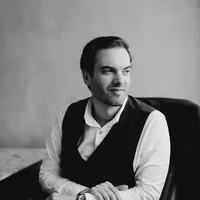
Dr. Thiago Perfeito
CRM-DF 23199 · Aesthetic and Regenerative Medicine
Physician with more than 10 years of practice in aesthetic and regenerative medicine. Master's degree in Aesthetic Medicine (2024). International training at Harvard Medical School and Mayo Clinic. Member of ASLMS, A4M, AMS, and NYAS. Practicing in Brasília, Lago Sul.
Learn about Dr. Thiago →Frequently asked questions about Anti-aging regenerative
-
What is regenerative anti-aging?
Regenerative anti-ageing refers to treatments that restore the biological structures responsible for youthful skin and facial architecture — principally collagen density, dermal hydration, and subcutaneous volume — rather than simply masking their loss. The clinical tools include poly-L-lactic acid, calcium hydroxylapatite biostimulators, energy-based devices, exosome therapies, and autologous fat grafting. Results develop gradually as tissue remodelling progresses, producing outcomes that read as natural restoration rather than visible intervention.
-
Best options in Brasília?
INTI clinic in Lago Sul offers one of the few genuinely integrated regenerative programmes in Brasília, combining biostimulatory injectables, fractional radiofrequency (Morpheus8), Fotona laser protocols, and — where clinically appropriate — autologous fat grafting. The approach is differentiated from volume-focused practices by its emphasis on tissue quality and structural correction. All consultations and procedures are performed personally by Dr. Thiago Perfeito, CRM-DF 23199, and are available in English and Portuguese.
-
When to start?
There is no universally correct age. In clinical practice, the most productive window for preventive regenerative treatment is the mid-to-late thirties, when intrinsic collagen loss becomes measurable and biostimulatory agents can meaningfully slow the trajectory. That said, patients in their forties, fifties, and beyond respond well to regenerative protocols; the starting point shifts from prevention to active restoration. The determinant is tissue state, not chronological age. An initial consultation will establish whether a regenerative or structural approach — or a combination — is most appropriate.
-
How long do protocols last?
Duration depends on the agents and technologies used. Calcium hydroxylapatite biostimulation typically produces histologically confirmed collagen that persists for 12-18 months post-treatment; poly-L-lactic acid has a comparable or longer durability. Energy-based skin-quality results generally sustain for 12-24 months with appropriate photoprotection. Autologous fat grafting, where a proportion of transferred cells establish permanent vascularisation, can offer durable structural correction. Most patients adopt an annual maintenance rhythm rather than continuous treatment.
-
Investment range?
Investment varies considerably depending on the scope of the protocol — a single biostimulatory session, a multi-modal phased programme, or a combined surgical and regenerative approach each occupy different investment tiers. For context, regenerative aesthetic procedures performed at premium clinics in Brasília are generally comparable to mid-range pricing in London or Zurich. A personalised cost estimate is provided at the initial consultation once the clinical assessment is complete and a protocol recommendation has been made.
Schedule a consultation at INTI clinic
Dr. Thiago Perfeito offers initial consultations in English and Portuguese. Assessments are conducted personally — no delegation to assistants. Contact us to discuss your objectives and arrange a convenient time.