Regenerative aesthetic medicine in Brasília — what makes it different
A practice built on tissue biology, not volume alone — regenerative protocols that restore what the body has lost, without the tell-tale signs of aesthetic intervention.
Book ConsultationRegeneration versus harmonisation: a clinical distinction that matters
Regenerative aesthetic medicine addresses the biological causes of ageing — collagen depletion, fat compartment atrophy, skeletal resorption, and dermal thinning — rather than masking their visible consequences with filler-led volumising. The distinction is not semantic. Conventional harmonisation, as widely practised across Brazil, typically involves strategic placement of hyaluronic acid to restore perceived volume and rebalance facial proportions. The result, when well-executed, can be pleasing. The limitation is that it treats appearance, not aetiology.
Regenerative protocols work differently. Biostimulators such as poly-L-lactic acid (PLLA) and calcium hydroxylapatite (CaHA) do not fill space — they signal fibroblasts to synthesise new collagen and elastin. Autologous fat grafting restores lost structural volume with the patient's own tissue, which, when processed correctly, carries viable stromal-vascular fraction cells capable of local regenerative activity. Polynucleotides (PDRN) and exosome preparations act on cellular repair pathways, improving dermal hydration, barrier function, and mitochondrial activity at the tissue level.
The clinical literature increasingly supports this distinction. In a systematic review published in Aesthetic Surgery Journal (Fitzgerald et al., 2024), biostimulator-based protocols demonstrated sustained structural improvement at twelve months, whereas hyaluronic acid alone showed progressive regression after six months. This does not make fillers obsolete — it clarifies their appropriate role as one tool within a broader regenerative strategy, not the centrepiece of every treatment plan.
At INTI clinic in Lago Sul, Brasília, Dr. Thiago Perfeito (CRM-DF 23199) designs protocols from this biological framework — beginning with tissue assessment, not with a product catalogue.
Technologies and modalities in regenerative aesthetic practice
A coherent regenerative programme draws on several distinct modalities, each acting on a different biological layer. The art of practice lies in selecting and sequencing them correctly for each patient's specific tissue deficit — not in applying them indiscriminately.
- Poly-L-lactic acid (PLLA / Sculptra): a bioactivator that stimulates neocollagenesis over three to six months. Indicated for diffuse volume loss and dermal thinning across the face and body. Effects accumulate gradually and typically persist for two or more years.
- Calcium hydroxylapatite (CaHA / Radiesse): provides immediate structural support while simultaneously triggering collagen production. Particularly useful for deep facial scaffolding and body applications including the décolletage and hands.
- Autologous fat grafting: transfers the patient's own fat — rich in stromal-vascular fraction — to restore structural volume with biologically compatible tissue. Outcomes depend critically on harvesting, processing, and injection technique.
- Polynucleotides / PDRN: DNA-derived molecules that activate purinergic receptors involved in tissue repair, anti-inflammation, and neovascularisation. Emerging evidence supports their role in skin quality improvement and post-procedure recovery.
- Exosome preparations (Exocube protocol): cell-signalling vesicles that modulate fibroblast activity, reduce inflammatory burden, and support epidermal renewal. Used as adjuvants to energy-based and injection protocols.
- Energy-based devices (Morpheus8, Fotona, Ultraformer MPT): radiofrequency microneedling and focused ultrasound act on the SMAS and dermis to stimulate contraction and neocollagenesis without incision.
These modalities are not competing options — they operate on different tissue planes and timescales. An integrated protocol may combine structural fat grafting, a biostimulator series, and an exosome adjuvant, sequenced over several months.
What to expect when seeking regenerative care as an expat in Brasília
For diplomats and international professionals relocating to Brasília, navigating the local aesthetic medicine landscape requires a degree of due diligence that would be familiar to anyone who has sought care in London, New York, or Singapore. The Brazilian market contains practitioners of exceptional technical calibre alongside a far larger population of injectors with limited formal training in regenerative protocols. The distinction is not always apparent from a clinic's marketing materials.
Several practical considerations apply. First, the consultation should precede any treatment by at least one appointment. A physician who offers same-day injection of any biostimulator or fat grafting procedure without a prior clinical assessment — including a structured facial analysis and discussion of tissue history — is not practising regenerative medicine in the clinical sense. Second, the language of the consultation matters. Dr. Perfeito conducts consultations in English and Portuguese, which removes a significant barrier for patients more comfortable discussing medical nuance in their first language.
Third, the timeline. Regenerative results are not immediate. Patients accustomed to the visible swelling and instant projection of hyaluronic acid often find the subtlety of a biostimulator programme unfamiliar at first. The clinical endpoint — natural structural improvement that colleagues cannot attribute to any specific intervention — emerges over three to six months and continues to develop beyond that. This is, by design, the opposite of the "done" look.
The INTI clinic is located in Lago Sul (QI 11, Bloco O, Sala 115), within the diplomatic residential belt of Brasília — a deliberate positioning for an international clientele with specific expectations around discretion, clinical rigour, and access.
Related reading
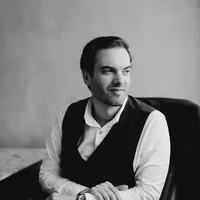
Dr. Thiago Perfeito
CRM-DF 23199 · Aesthetic and Regenerative Medicine
Physician with more than 10 years of practice in aesthetic and regenerative medicine. Master's degree in Aesthetic Medicine (2024). International training at Harvard Medical School and Mayo Clinic. Member of ASLMS, A4M, AMS, and NYAS. Practicing in Brasília, Lago Sul.
Learn about Dr. Thiago →Frequently asked questions about Regenerative aesthetic medicine
-
What is regenerative aesthetic medicine?
Regenerative aesthetic medicine is a clinical approach that addresses the biological mechanisms of ageing — collagen depletion, fat compartment atrophy, skeletal resorption, and dermal thinning — rather than solely correcting their visible appearance. It uses biostimulators, autologous fat grafting, polynucleotides, exosomes, and energy-based devices to restore tissue structure and function at a cellular level. The goal is improvement that is natural and progressive, not immediately apparent as an aesthetic intervention.
-
How is it different from harmonization?
Harmonisation, as commonly practised, uses hyaluronic acid filler to redistribute volume and rebalance facial proportions. It addresses appearance. Regenerative medicine addresses aetiology — the biological reasons volume was lost and skin quality declined. Biostimulators stimulate the patient's own collagen synthesis. Fat grafting restores structure with autologous tissue. The two approaches are not mutually exclusive, but regenerative protocols produce results that continue to develop and improve over months, rather than regressing as the filler resorbs.
-
What technologies are involved?
The principal modalities include poly-L-lactic acid (Sculptra), calcium hydroxylapatite (Radiesse), autologous fat grafting with stromal-vascular fraction, polynucleotides and PDRN, exosome preparations (including the Exocube protocol), and energy-based devices such as Morpheus8 radiofrequency microneedling, Fotona laser, and Ultraformer MPT focused ultrasound. These are not alternative options — they act on different tissue planes and are selected and sequenced according to each patient's specific clinical picture.
-
Where to find it in Brasília?
Dr. Thiago Perfeito (CRM-DF 23199) practises regenerative aesthetic medicine at INTI clinic, located at Deck Brasil, QI 11, Bloco O, Sala 115, Lago Sul, Brasília. The clinic is within the diplomatic residential district and offers consultations in English and Portuguese. Appointments can be requested via the contact form on this site or directly by WhatsApp.
-
Cost expectations?
Investment in a regenerative programme depends substantially on the protocol designed — a single biostimulator session differs meaningfully in cost from a multi-stage programme combining fat grafting, biostimulators, and energy-based adjuvants delivered over several months. A precise figure is only meaningful after a clinical consultation, at which point Dr. Perfeito presents a structured treatment plan with transparent cost breakdown. As a general reference, regenerative protocols in Brasília are priced comparably to equivalent care in São Paulo, and typically below what patients would expect at a comparable clinic in London or New York.
Begin with a clinical consultation
A regenerative programme is designed after assessment, not before. Book a consultation in English or Portuguese with Dr. Thiago Perfeito at INTI clinic, Lago Sul, Brasília.