Non-surgical facelift in Brasília: Hybrid Face Lift and modern alternatives to deep plane surgery
When the honest answer is not surgery — and not just filler. A structured, layer-by-layer protocol for patients with early to moderate laxity who want refinement without irreversibility.
Book ConsultationWhen surgical facelift is the right answer — and when it is not
The surgical facelift — particularly deep plane rhytidectomy — remains the most powerful single intervention available for facial rejuvenation. The procedure, systematised by Hamra (Plastic and Reconstructive Surgery, 86(1):53-61, 1990) and refined over four decades, operates directly on the SMAS and the deep facial ligaments, repositioning descended tissue to its anatomically youthful position. Its results, when executed by a skilled surgeon, can persist for eight to twelve years. In Brasília, as in any major Brazilian city, deep plane surgery is performed by physicians with an active medical license (CRM), specific surgical training, and access to a credentialed surgical facility — the combination that determines patient safety, not the specialty title alone.
The honest clinical question is not "surgery vs no surgery." The honest question is: does this patient's anatomy, at this point in time, actually require surgery to achieve a meaningful result?
Surgery is the right answer when:
- Facial ptosis is advanced — the malar fat pad has significantly descended, jowling is structurally established, and soft tissue repositioning requires mechanical traction that no energy device or injectate can replicate
- There is excess redundant skin that cannot be tightened by non-ablative means
- Skeletal structural deficit (mandibular resorption, midface bony recession) exceeds what filler can scaffold convincingly
- The patient has already undergone non-surgical protocols and has reached their ceiling of improvement
- Age and general health allow safe anaesthesia and adequate surgical recovery (two to four weeks of social downtime)
Non-surgical protocols — including the Hybrid Face Lift — are the right answer when:
- Laxity is early to moderate: initial malar descent, early nasolabial deepening, soft jowling that still responds to manual tissue displacement, and volumetric loss in the temples, midface, and periorbital region
- Skin quality is the primary concern: texture, radiance, and dermal density — before significant ptosis has established itself
- The patient is between 45 and 55 years of age and structurally appropriate for a non-surgical approach that can defer surgery by three to five years with maintained results
- Recovery window is a material constraint: professional or social commitments that make two to four weeks of post-surgical downtime clinically impractical
- Reversibility matters: the patient values the ability to maintain their result without a permanent anatomical change that may need surgical revision
One further point that must be stated explicitly: biostimulators — Sculptra, Radiesse, HarmonyCa — are contraindicated in the six months preceding planned facial surgery. The fibrotic tissue response induced by collagen biostimulation can interfere with the surgical dissection plane and with healing. Plastic surgeons routinely use biostimulators in late post-operative contexts. They are not appropriate as pre-surgical preparation in the months immediately before an operation.
The consultation is the place to make this stratification. "Surgery now, or a non-surgical protocol and reassessment in 12 months" is a clinical conversation — not a commercial one.
What the Hybrid Face Lift protocol actually is — layer by layer
The term "non-surgical facelift" encompasses a wide range of interventions, from a single session of radiofrequency to a comprehensive multi-modality protocol. The Hybrid Face Lift, as structured at INTI Clinic in Brasília, is the latter: a sequenced combination of four distinct modalities, each operating at a specific tissue depth, designed to address the anatomical mechanisms of facial ageing rather than individual symptoms.
Understanding what it does requires understanding the anatomy it targets.
Layer 1 — the SMAS (Superficial Musculoaponeurotic System): The SMAS is the fibromuscular layer that surgical facelifts mobilise mechanically. In the Hybrid Face Lift, HIFU energy — delivered via Ultraformer MPT — is focused at 4.5 mm depth to induce thermal coagulation points in the SMAS, triggering a wound-healing response and secondary myofascial contraction. The effect is a measurable vertical vector of repositioning in the treated tissue.
Layer 2 — the deep dermis and subdermis (reticular dermis, 1.5-3 mm): Radiofrequency microneedling (Morpheus8) delivers fractional RF energy at programmable depths, inducing controlled thermal injury in the collagen network of the reticular dermis. The repair response produces new type I and III collagen fibres over the following eight to twelve weeks, with measurable improvement in skin thickness, firmness, and surface texture.
Layer 3 — the subdermal scaffold (biostimulator): Sculptra (poly-L-lactic acid) or Radiesse (calcium hydroxyapatite) is injected into the deep subdermal plane, where it acts as a scaffold for fibroblast activation and progressive collagen synthesis. The biostimulator does not add volume directly — it builds the biological matrix that restores structural support progressively over six months. Critical safety note: this component is contraindicated in the six months preceding any planned facial surgical procedure. Post-surgically, biostimulators are appropriate after full healing is confirmed — typically from six months onward.
Layer 4 — structural anchoring (microdose HA): Strategic microdoses of hyaluronic acid are placed at anatomical anchor points — temples, midface, tear trough — to restore the volumetric architecture that supports the overlying soft tissue. At this scale, the HA functions as structural support rather than filler.
The combination is sequenced deliberately. HIFU repositions and contracts. RF microneedling rebuilds the dermal scaffold. Biostimulator creates new biological matrix. Microdose HA restores structural support. No modality in isolation produces all four effects.
Investment and recovery framing: The Hybrid Face Lift protocol — combining Ultraformer MPT, Morpheus8, biostimulator, and HA microdoses — represents a total investment typically in the range of R$ 19,000 to R$ 45,000+ over the full protocol course. This compares with the R$ 50,000 to R$ 250,000 range for deep plane lifting in Brasília (which includes surgeon fees, anaesthesia, and facility costs), and R$ 20,000 to R$ 80,000 for mini-lifting. The non-surgical protocol costs less and carries significantly shorter recovery — but its durability is 18 to 24 months, not 8 to 12 years.
A randomised controlled study by Suh et al. (Dermatologic Surgery, 2015) documented significant improvement in SMAS laxity and patient satisfaction following HIFU treatment at 12-week follow-up, supporting the biological mechanism underlying the HIFU component of the Hybrid Face Lift.
Recovery, durability, and how to begin
Recovery from the Hybrid Face Lift protocol is substantially shorter than from surgical facelift — but it is not zero. Patients should expect a realistic social downtime of five to ten days across the protocol course, primarily attributable to the Morpheus8 radiofrequency microneedling sessions, which produce transient erythema, mild oedema, and occasional small-calibre bruising at microneedle entry points. These resolve without intervention within five to seven days in most patients.
HIFU sessions (Ultraformer MPT) typically produce mild post-treatment erythema and occasional superficial tenderness for 24 to 48 hours. Biostimulator injection sessions may cause localised swelling for three to five days at injection sites. HA microdose sessions carry the same mild bruising and oedema risk as standard filler — resolved within 48 to 72 hours in most cases.
Expected timeline across the full protocol:
- Sessions 1-2 (weeks 0-4): HIFU and first Morpheus8 session. Immediate skin tightening sensation; subtle surface improvement visible within two weeks as dermal remodelling begins. Social downtime 5-7 days per Morpheus8 session.
- Session 3 (week 8-10): Biostimulator and HA structural session. Mild swelling 3-5 days. No visible immediate change from the biostimulator — the collagen response is biological, not volumetric.
- Month 3: Morpheus8-driven collagen maturation produces clinically visible skin quality improvement. Surface texture, firmness, and dermal density measurably changed from baseline.
- Month 6: Peak biostimulator effect. Maximum collagen matrix deposition. Full protocol results visible. Standardised comparative photography at this point documents the cumulative outcome.
- Months 12-18: Maintenance assessment. In most patients, a biostimulator top-up or HIFU session at this interval sustains the result without restarting the full protocol.
By comparison, surgical facelift requires two to four weeks of social downtime, six to eight weeks before resuming full physical activity, and carries the inherent irreversibility of tissue repositioning and scar placement. The decision is not purely about result quality — it is about anatomy, priorities, and life logistics.
The Hybrid Face Lift does not replace surgery for patients who need surgery. For patients who do not yet need surgery — or who are not ready for it — it is a clinically structured, evidence-informed alternative that delivers meaningful results within a recovery window compatible with an active professional and social life.
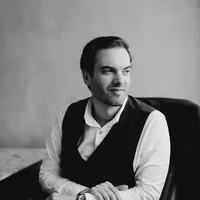
Dr. Thiago Perfeito
CRM-DF 23199 · Aesthetic and Regenerative Medicine
Physician with more than 10 years of practice in aesthetic and regenerative medicine. Master's degree in Aesthetic Medicine (2024). International training at Harvard Medical School and Mayo Clinic. Member of ASLMS, A4M, AMS, and NYAS. Practicing in Brasília, Lago Sul.
Learn about Dr. Thiago →Frequently asked questions about Non-surgical facelift Hybrid Face Lift
-
When is surgical facelift the answer — and when is non-surgical appropriate?
Surgical facelift is the appropriate choice when facial ptosis is advanced, there is excess redundant skin that cannot be tightened by energy devices, or structural skeletal deficit exceeds what filler can address convincingly. Deep plane lifting by a qualified surgeon with specific surgical training and an accredited surgical facility produces results lasting eight to twelve years. Non-surgical protocols — including the Hybrid Face Lift — are clinically appropriate for early to moderate laxity in patients aged 45 to 60, where anatomical descent has not yet exceeded what HIFU, RF microneedling, biostimulator, and structural HA can address. The consultation determines which category applies.
-
What exactly is the Hybrid Face Lift protocol?
The Hybrid Face Lift is a sequenced combination of four modalities, each targeting a distinct tissue layer. High-intensity focused ultrasound (Ultraformer MPT) acts at SMAS depth — the same layer a surgical facelift mobilises mechanically. Radiofrequency microneedling (Morpheus8) rebuilds the dermal collagen scaffold at 1.5 to 3 mm depth. Injectable biostimulator (Sculptra or Radiesse) creates new biological matrix progressively over six months. Structural microdose HA restores volumetric anchoring at temples, midface, and the periorbital region. The combination produces a multidimensional result that no single modality replicates. Sessions are typically spaced four to six weeks apart.
-
How does the Hybrid Face Lift compare to deep plane surgery?
Deep plane lifting repositions descended facial tissue mechanically, with results lasting eight to twelve years. It requires general or sedation anaesthesia, two to four weeks of social recovery, and produces a permanent anatomical change. The Hybrid Face Lift produces results that last 18 to 24 months with five to ten days of social downtime across the full protocol, no anaesthesia, and no permanent alteration of facial anatomy. Investment is typically R$ 19,000 to R$ 45,000+ for the non-surgical protocol versus R$ 50,000 to R$ 250,000 for deep plane surgery in Brasília. The tradeoff is explicit: less durability and lower absolute power of correction, in exchange for reversibility, shorter recovery, and lower cost.
-
What is recovery like compared to surgical facelift?
The Hybrid Face Lift carries approximately five to ten days of social downtime across the full protocol, primarily from the radiofrequency microneedling sessions. Erythema, mild oedema, and occasional bruising resolve within five to seven days. HIFU sessions produce 24 to 48 hours of mild tenderness. Biostimulator injection sites may swell for three to five days. There is no anaesthesia recovery, no wound care, and no restriction on physical activity beyond the first 48 hours after each session. Surgical facelift requires two to four weeks of social downtime and six to eight weeks before resuming full physical activity.
-
How long do the results of a non-surgical facelift last?
The Hybrid Face Lift protocol typically delivers results lasting 18 to 24 months. The biostimulator component reaches peak collagen synthesis at month six; skin quality improvement from Morpheus8 is measurable from month three. A maintenance session — typically a biostimulator top-up or repeat HIFU — at 12 to 18 months sustains results without restarting the full protocol. Durability is significantly shorter than surgical facelift (8 to 12 years) but is maintained long-term with a predictable annual or biannual maintenance schedule.
Schedule a clinical assessment in Brasília
Dr. Thiago Perfeito (CRM-DF 23199) will assess your facial anatomy, review your medical history, and define whether the Hybrid Face Lift is the appropriate intervention — or whether a surgical referral is the honest recommendation. Consultations in English and Portuguese at INTI Clinic, Lago Sul.