Exocube — exosome regenerative protocol for skin and hair
Exocube delivers autologous exosomes — prepared from your own PRP with the Exocube device — to the face and scalp, recruiting the body's own repair signalling. Clinical protocol. Individually designed.
Book ConsultationWhat exosomes do — and why Exocube differs from conventional regenerative treatments
Exocube is a structured regenerative protocol that introduces autologous exosomes — prepared from the patient's own PRP with the Exocube device — into the dermis and scalp to initiate tissue-level repair signalling, a mode of action distinct from hyaluronic acid fillers and biostimulators. The distinction matters clinically: exosomes are not cells, not growth factors, and not scaffold materials. They are extracellular vesicles — 30 to 200 nm membrane-bound structures released by cells — that carry a highly concentrated cargo of signalling molecules: microRNA, mRNA transcripts, lipids, and proteins that regulate cellular behaviour downstream in recipient tissue.
Two kinds of exosome are used in aesthetic practice, and they should not be confused. Exocube is autologous: a blood sample is drawn, processed into platelet-rich plasma (PRP), and the PRP is then run through the Exocube device — made by the same manufacturer as Lipocube — which activates and concentrates the vesicles. Ready-made exosomes are commercial products manufactured outside the patient from cell cultures, usually mesenchymal stem cells; they require no blood draw. INTI clinic may use either, depending on the indication.
When delivered to the dermis, exosomes interact with fibroblasts, keratinocytes, and endothelial cells, modulating gene expression towards proliferation and extracellular matrix synthesis. The key effectors include transforming growth factor-beta (TGF-β), vascular endothelial growth factor (VEGF), and hepatocyte growth factor (HGF) — proteins that orchestrate collagen type I deposition, neovascularisation, and keratinocyte renewal. This is not a surface-level stimulus; it is intracellular signal transduction.
On the scalp, the mechanism converges on hair follicle dermal papilla cells. Exosomes extend the anagen (growth) phase, upregulate Wnt/β-catenin signalling — the primary pathway governing follicular cycling — and suppress the DHT-mediated miniaturisation cascade. Published research by Seo et al. (Stem Cell Research & Therapy, 2022) demonstrated significant promotion of hair shaft elongation and upregulation of anagen markers in dermal papilla cultures exposed to adipose-derived exosomes, supporting the biological rationale for scalp application. Note that this study used stem cell-derived exosomes, not PRP-derived exosomes prepared with Exocube.
In the Exocube protocol the preparation is delivered by injection, placing it directly in the dermis of the face or in the scalp rather than relying on absorption through the skin surface. Exocube can be associated with microneedling or energy-based procedures such as Morpheus8 when the clinical plan calls for it, but that pairing is an option decided case by case — it is not part of the protocol itself.
Clinical indications and patient selection for Exocube
Exocube is appropriate for patients whose primary concern is tissue quality — not just volume or wrinkle correction — and who require a regenerative approach rather than a filling or relaxing intervention. Candidate profiles evaluated at INTI clinic:
- Skin quality decline: loss of dermal thickness, luminosity, and texture in patients 40 and older; post-menopausal skin with reduced fibroblast activity; skin with photoageing or early atrophic changes
- Androgenetic alopecia: female pattern hair loss (Ludwig I–II) and male pattern loss (Norwood–Hamilton I–III); diffuse telogen effluvium following hormonal transition or systemic stress; early post-partum alopecia
- Post-procedure skin recovery: accelerating healing after ablative fractional laser, Morpheus8, or high-density Fotona; reducing downtime and optimising collagen remodelling windows
- Adjunct to fat grafting: an Exocube session in the weeks following lipofilling to support graft integration and neovascularisation at the recipient site
Patients who are not candidates:
- Active cutaneous or scalp infection (folliculitis, seborrhoeic dermatitis in acute flare)
- Immunosuppressive therapy or active autoimmune disease in relapse
- Platelet dysfunction or coagulopathy precluding blood draw and injections
- Unrealistic outcome expectations — exosomes restore biological signalling; they do not reverse advanced scarring alopecia (Norwood V–VII) or replace surgical hair restoration in established baldness
- Pregnancy and lactation — safety data insufficient
A clinical assessment is mandatory before any session. Scalp photography and, where clinically indicated, trichoscopy are performed at baseline to establish measurable endpoints. The protocol itself is fixed — a single injectable session — while the areas to be treated and any association with other procedures are defined individually at this assessment.
Protocol structure, evidence base, and what to expect after the session
The Exocube protocol is a single session. A blood sample is drawn and processed into platelet-rich plasma (PRP); the PRP is run through the Exocube device, and the resulting autologous exosome preparation is injected into the face or scalp during the same visit. Microneedling or an energy-based procedure may be associated when the clinical plan calls for it, but it is not a required step of the protocol.
What to expect in clinical practice:
Day of the session: Baseline documentation, blood draw, preparation of the exosome concentrate, and injection. Mild, transient redness at the injection sites is expected. No dramatic visible change occurs at this stage; biological signalling is initiated at the cellular level.
Following weeks: Change, when it occurs, is gradual — in skin radiance and texture on the face and, on the scalp, typically first as reduced hair shedding.
Reassessment at the return visit: Comparative photographic review against baseline, with next steps discussed based on clinical response.
The evidence base for exosome therapy in aesthetic medicine is rapidly developing. A systematic review by Kim et al. (International Journal of Molecular Sciences, 2023) summarised preclinical and early clinical data confirming exosome-mediated upregulation of collagen synthesis and acceleration of wound repair. Much of this literature concerns stem cell-derived exosomes; there is no published study of the Exocube device itself. The clinical studies in this literature have mostly applied stem cell-derived exosomes topically after skin micro-injury (microneedling or fractional laser): they support the exosome class and its mechanism, not the injectable route used in the Exocube protocol. For scalp applications, the Wnt/β-catenin pathway data remains primarily preclinical — clinical evidence is preliminary and patients should be counselled accordingly. This is a field in which the science is advancing rapidly, and the clinical literature will be more definitive within three to five years.
Exocube is not a replacement for structural correction — it does not restore lost volume, reposition descended soft tissue, or reduce hyperkinetic expression lines. Its role is the restoration of biological tissue quality: the luminosity, density, and resilience that precedes or accompanies anatomical ageing changes. In patients requiring both volume restoration and regenerative input, Exocube is most effective as a combined protocol alongside the Hybrid Face Lift or fat grafting.
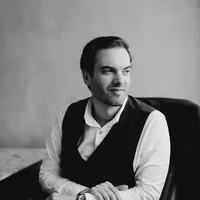
Dr. Thiago Perfeito
CRM-DF 23199 · Aesthetic and Regenerative Medicine
Physician with more than 10 years of practice in aesthetic and regenerative medicine. Master's degree in Aesthetic Medicine (2024). International training at Harvard Medical School and Mayo Clinic. Member of ASLMS, A4M, AMS, and NYAS. Practicing in Brasília, Lago Sul.
Learn about Dr. Thiago →Frequently asked questions about Exocube
-
What are exosomes?
Exosomes are extracellular vesicles — membrane-bound particles between 30 and 200 nanometres — released by cells as a way of communicating with one another. They carry microRNA, mRNA, growth factors, and lipids that signal recipient cells to proliferate, synthesise collagen, and repair. There are two kinds used in aesthetic practice: autologous exosomes, which Exocube prepares from the patient's own PRP, and ready-made exosome products, manufactured from cell cultures (usually mesenchymal stem cells). Neither kind contains living cells.
-
How is Exocube different from PRP?
Both start from the same place: a sample of the patient's own blood. PRP is the first step — the blood is centrifuged to concentrate platelets, which release growth factors such as PDGF, TGF-β, and VEGF. Exocube adds a further processing step: the PRP is run through the Exocube device, which activates and concentrates the extracellular vesicles (exosomes) it contains. These vesicles carry microRNA and other signalling molecules that act inside recipient cells. According to the manufacturer, the process yields 17.6 times more vesicles than PRP alone; this is a manufacturer claim, and no published clinical study of the Exocube device is yet available. Because the material is autologous, Exocube always requires a blood draw.
-
What conditions respond best?
Clinical experience and published preliminary data suggest the strongest response profiles in: early to moderate androgenetic alopecia (Ludwig I–II; Norwood I–III), skin quality decline with loss of luminosity and texture in patients 40 and older, post-procedural recovery acceleration after laser or RF microneedling, and adjunct support after fat grafting. Advanced scarring alopecia or severely photodamaged skin with structural loss respond less predictably to exosome therapy alone.
-
How many sessions are needed?
One. The Exocube protocol is a single session: blood is drawn, processed into PRP and run through the Exocube device, and the resulting autologous exosome preparation is injected into the face or scalp during the same visit. Results are then reviewed against baseline at a reassessment on the return visit.
-
Is there clinical evidence?
The evidence base is growing but remains largely preclinical and in early-phase clinical trial for aesthetic indications. Most published studies use stem cell-derived (ready-made) exosomes rather than PRP-derived ones, and there is no published study of the Exocube device itself. Seo et al. (Stem Cell Research & Therapy, 2022) demonstrated significant follicular growth promotion in dermal papilla cultures exposed to adipose-derived exosomes. Kim et al. (International Journal of Molecular Sciences, 2023) systematically reviewed exosome-mediated collagen synthesis and wound repair data. Wnt/β-catenin pathway modulation for hair cycling has strong preclinical support. An important caveat on route: Seo et al. is a laboratory (cell culture) study, and the clinical exosome studies in aesthetics have mostly used stem cell-derived exosomes applied topically after skin micro-injury such as microneedling. That literature supports the class and the biological mechanism; it does not validate the injectable route used in the Exocube protocol, nor the Exocube device itself. Patients should be counselled that this is an emerging field — the mechanism is scientifically well-founded, but large-scale randomised controlled trials are pending.
Discuss the Exocube protocol with Dr. Thiago Perfeito
Individual clinical assessment for skin and scalp regeneration in Brasília. A single-session protocol, planned around your indication.