Lipocube — body contouring with regenerative fat grafting
Lipocube harvests your own adipose tissue, processes it to preserve cellular integrity, and grafts it precisely to recontour the abdomen and gluteal region — using living tissue, not foreign material.
Book ConsultationWhat Lipocube does and how fat grafting differs from synthetic fillers
Lipocube — here, Dr. Thiago's protocol using the Lipocube platform — combines a small-volume fat harvest (up to about 250 mL, closer to a mini-liposuction than to traditional liposuction) with autologous fat grafting to simultaneously reduce unwanted contour irregularities in donor areas and restore volume and shape in recipient areas — using the patient's own adipose tissue as the grafting material. No synthetic filler, implant, or foreign substance is introduced. The biological substrate is the patient's own fat.
The distinction from hyaluronic acid or biostimulator fillers is fundamental. Injectable fillers work by occupying extracellular space or stimulating collagen via a foreign-body scaffold. Autologous fat grafting transfers living adipocytes and, critically, the stromal vascular fraction (SVF) — a population rich in adipose-derived stem cells (ADSCs), pericytes, and endothelial progenitor cells that drive vascularisation of the graft and contribute regenerative signalling to surrounding tissue.
The procedure operates in two phases. First, under local anaesthesia, up to about 250 mL of fat is harvested from areas of excess — a mini-liposuction rather than a traditional liposuction — typically from the abdomen, flanks, inner thighs, or lower back. Sedation with an anaesthetist is optional and rarely used: only when the patient asks for it, never as a requirement. Second, the harvested fat is processed through a closed-membrane filtration system to remove aqueous and oily contaminants while preserving adipocyte integrity, and prepared as microfat (for volume) or nanofat (for skin quality).
The purified fat is then injected via blunt-tipped cannulae in multiple thin passes across several tissue planes — a technique that spreads the graft in small parcels across the recipient bed.
Lipocube is a third-party platform from the United Kingdom. Dr. Thiago Perfeito has no commercial relationship with the manufacturers of the devices and products mentioned on this page.
Indications, candidacy, and contraindications
Lipocube is designed for patients who present with one or more of the following:
- Abdomen or flank contour irregularities with sufficient local donor-site volume
- Gluteal volume deficit or shape asymmetry seeking augmentation without implants
- Post-liposuction or post-weight-loss contour deformities requiring volumetric correction
- Patients who have experienced significant weight reduction (including weight loss with Mounjaro/tirzepatide or Ozempic/semaglutide — colloquially termed "Ozempic Body"), after at least three months of stable weight, and present with deflation of the gluteal and abdominal contour
- Patients who prefer autologous material over synthetic implants for biocompatibility and longevity considerations
Absolute contraindications:
- Insufficient donor-site adipose volume (body mass index typically below 19–20 makes adequate harvest technically challenging)
- Active infection at harvest or recipient sites
- Haematological disorders or anticoagulant therapy that cannot be safely interrupted
- Severe metabolic disease or uncontrolled diabetes mellitus
- Active malignancy or recent oncological treatment
- Unrealistic expectations regarding symmetry, volume precision, or permanence
Relative contraindications and important clinical notes:
- Significant planned weight fluctuation after the procedure — a weight gain or loss exceeding 5–8 kg post-grafting will affect graft volume, as transplanted adipocytes behave like the patient's own native fat cells and respond to metabolic changes accordingly
- History of prior surgery in the recipient area (scarring alters vascularisation and may reduce retention)
- Smoking — nicotine impairs microvascular perfusion and reduces graft take; cessation for at least four weeks prior is required
The clinical assessment determines donor-site adequacy, recipient-site capacity, and realistic volume targets. Patients are counselled that some degree of asymmetry correction across two sessions is common, not exceptional.
Recovery, volume retention, and long-term results
The immediate post-procedural period involves swelling and bruising at both donor and recipient sites, typically resolving within three to four weeks. A compression garment is worn continuously for four to six weeks to support donor-site contraction and minimise seroma formation. Patients usually return to work within 48 to 72 hours; vigorous physical activity is resumed from three to four weeks, to protect the maturing graft. Lymphatic drainage can begin from day 7, and follow-up visits take place at two weeks and three months.
Volume retention is the central clinical variable in autologous fat grafting. Part of the grafted fat is naturally reabsorbed in the first weeks. Dr. Thiago plans each case assuming a loss of 30–40% of the grafted fat, so the volume placed includes a margin to compensate for it. This is why the final corrected volume is assessed at three months, once the initial resorption phase is complete.
Once the graft has vascularised and integrated — assessed at three months — the retained volume behaves as native adipose tissue. It is not reabsorbed on the same timeline as hyaluronic acid fillers. Patients who maintain a stable body weight can expect durable results; losing weight after the graft consumes the grafted fat, so the guidance is not to lose weight afterwards.
A second session, if clinically indicated, may be planned at six months. Many patients achieve their target contour in a single session, particularly when donor-site volume permits adequate grafting volume at the first procedure.
This protocol is part of a broader clinical approach to body contouring that may be combined with energy-based tissue remodelling for skin quality, laxity correction, and fibrous septae release. Patients presenting with significant skin laxity after weight loss are assessed for combined approaches.
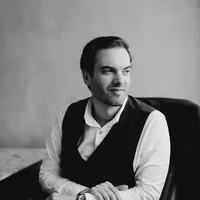
Dr. Thiago Perfeito
CRM-DF 23199 · Aesthetic and Regenerative Medicine
Physician with more than 10 years of practice in aesthetic and regenerative medicine. Master's degree in Aesthetic Medicine (2024). International training at Harvard Medical School and Mayo Clinic. Member of ASLMS, A4M, AMS, and NYAS. Practicing in Brasília, Lago Sul.
Learn about Dr. Thiago →Related guides: Best Lipocube fat transfer in Brasília · Best doctor for Lipocube in Brasília
Frequently asked questions about Lipocube
-
What does Lipocube treat?
Lipocube addresses contour irregularities and volume deficits in the abdomen, flanks, and gluteal region. It is designed for patients with areas of unwanted fat adjacent to areas of volume loss — the donor fat is harvested, processed, and grafted to reshape both zones simultaneously. Common candidates include patients after significant weight loss, including weight reduction with GLP-1 medicines such as Mounjaro (tirzepatide) or Ozempic (semaglutide), once weight has been stable for at least three months, and those seeking gluteal augmentation without implants.
-
How does fat grafting differ from filler?
Injectable fillers — hyaluronic acid, biostimulators, poly-L-lactic acid — are synthetic or semi-synthetic materials introduced into the tissue. Autologous fat grafting transfers living adipocytes and stromal vascular fraction from the patient's own body. The grafted tissue, once vascularised, integrates as native adipose tissue and responds to metabolic conditions accordingly. There is no foreign material, no risk of foreign-body reaction, and — once retention is established — no scheduled degradation as with resorbable fillers.
-
Is recovery long?
Recovery requires four to six weeks of compression garment use; lymphatic drainage can begin from day 7, and follow-up visits take place at two weeks and three months. Most patients return to work within 48 to 72 hours, and vigorous exercise is resumed from three to four weeks. Bruising and swelling at both donor and recipient sites typically resolve within three to four weeks. The graft goes through its early remodelling phase in the first weeks, and the final volume is assessed at three months.
-
How permanent are the results?
Once the grafted fat has vascularised and integrated — assessed at three months — the retained volume behaves as native adipose tissue. It is not on a fixed reabsorption timeline like hyaluronic acid. Body weight stability is the principal variable affecting long-term outcome: significant weight fluctuation will alter graft volume.
-
Who should not have this procedure?
Absolute contraindications include insufficient donor-site adipose volume, active infection, haematological disorders precluding safe surgical intervention, uncontrolled metabolic disease, active malignancy, and smoking without prior cessation. Patients planning significant weight changes after the procedure, with extensive scarring in the recipient area, or with unrealistic expectations regarding symmetry and volume precision are counselled individually and may be deferred until conditions are optimised.
Assess your candidacy for Lipocube in Brasília
A clinical evaluation determines donor-site volume, recipient-site anatomy, and realistic contour targets. The consultation is the first step — no commitment to proceed.