Bilingual aesthetic care in Lago Sul: how a diplomat-friendly clinic actually works
A concierge-grade, fully bilingual aesthetic and regenerative medicine clinic in Lago Sul — structured around the schedules, privacy requirements, and clinical standards that the diplomatic and international professional community expects.
Book ConsultationWhat bilingual concierge actually means — beyond speaking English in the waiting room
Bilingual concierge care is not a clinic where someone at reception speaks conversational English. It is a clinical environment where every step of the medical encounter — history-taking, diagnosis, procedure explanation, informed consent, and follow-up — is conducted in English, documented in English, and designed for continuity with practitioners outside Brazil.
The distinction matters clinically. Aesthetic and regenerative medicine involves nuanced communication: the difference between "some swelling" and "significant oedema," between "it might sting" and "the procedure involves injection of a product with a high viscosity that creates transient pressure sensation." When the physician operates in their second language, that precision erodes. When clinical documentation is produced in Portuguese and handed to a patient who will show it to a practitioner in Washington or Geneva, the documentation becomes useless.
At INTI clinic, Lago Sul, consultations with Dr. Thiago Perfeito (CRM-DF 23199) are conducted in clinical English. The consultation covers: chief concern and aesthetic objectives in the patient's own words; medical history review with standard international terminology; physical assessment with anatomical explanation of findings; treatment options with mechanism of action, expected outcome, timeline, and alternatives explained; and informed consent in English.
Written documentation produced in English for every appointment includes: the treatment plan with product names (international trade names, not Brazilian-market names), dosages, anatomical targets, and sequencing rationale; the post-procedure instruction sheet; and a follow-up summary generated within 48 hours. These documents are formatted to be legible to a receiving practitioner in the United Kingdom, the United States, continental Europe, or East Asia — not just to a Brazilian medical records system.
Post-procedure communication occurs via WhatsApp in English, with a dedicated clinical line separate from administrative queries. Response time for clinical questions is within 4 hours during business hours. For patients travelling within Brazil or returning abroad, a brief telemedicine check-in can be arranged in English.
The clinic is located inside Deck Brasil, QI 11 Bloco O Sala 115, Lago Sul — a neighbourhood that houses a significant share of Brasília's embassy district residences, international school families, and expatriate professional community. Scheduling is structured around the rhythms of embassy and corporate calendars: early morning, late afternoon, and Saturday appointments are available on request. The address is 15 minutes from the embassy zone by car, with discreet access and no shared waiting area with other clinical specialties.
One clarification worth making: "bilingual" in a medical context is not the same as "translator available upon request." The former means the physician thinks, assesses, and explains in the patient's language. The latter means someone interprets between two parties who are not communicating directly. For a procedure that requires the patient to accurately describe what they are feeling during treatment — the pressure of a cannula, the onset of discomfort at a specific anatomical point — the difference is material.
Privacy, discretion, and documentation — how the clinic is structured for the diplomatic environment
Privacy in a clinical setting has two components that are often conflated but are structurally different: confidentiality (who can access information) and discretion (whether the visit itself is visible to others). Both matter for diplomatic and international professional patients, and both are addressed explicitly in how INTI clinic operates.
On confidentiality: Brazil's Lei Geral de Proteção de Dados (LGPD), which came into force in 2021, is the Brazilian equivalent of the European Union's General Data Protection Regulation. It establishes data subject rights, lawful basis requirements for processing, breach notification obligations, and data minimisation principles. For international patients whose home countries operate under GDPR or similar frameworks, LGPD compliance means that the clinical records held in Brazil meet a regulatory standard broadly comparable to what they would expect at home. Clinical records are not shared with third parties without explicit written consent.
On discretion: the clinic does not operate a shared waiting room with a display board of patient names or a reception area visible from a public corridor. Appointment scheduling is handled privately, with confirmation sent via a channel of the patient's choosing (WhatsApp, email, or phone). For patients who prefer not to use their own name in scheduling communications, an alternative can be arranged. Clinical staff are briefed on the professional context of the diplomatic and expat patient group and do not discuss individual cases outside the immediate clinical team.
For embassy health records and corporate occupational health purposes, the clinic produces documentation using internationally recognised diagnostic and procedural nomenclature. ICD-10 codes are applied where relevant. Product documentation uses international trade names and CAS numbers, not domestic abbreviations. This means a corporate health insurance reviewer or embassy medical officer reviewing the records will recognise what was performed without requiring translation or clarification from the patient.
A note on social media: no photographs of patients are taken without written consent specifying the exact intended use. Consent for before-and-after documentation does not imply consent for social media use, and the two are recorded separately. For patients in the diplomatic community, social media consent is not requested as a default — it requires a specific, affirmative opt-in.
LGPD provides a right of access to personal data, a right to correction, and a right to deletion upon termination of the clinical relationship, subject to statutory record retention requirements. These rights can be exercised in writing, in English, and will be responded to in writing, in English, within the statutory timeframe.
International product brands, continuity of care abroad, and what the first consultation involves
A practical question that arises frequently from international patients is whether the products used in Brazil are the same as those available in their home country — and whether a practitioner abroad can continue or reverse treatment begun in Brasília. The answer to both is, for the most part, yes.
The major aesthetic product brands — Allergan (Botox, Juvederm family), Galderma (Restylane family, Sculptra, Dysport), Merz (Belotero, Radiesse, Xeomin), and InMode (the manufacturer of Morpheus8) — are multinational corporations operating globally under consistent quality standards. Allergan's manufacturing facilities for botulinum toxin are subject to FDA, EMA, and ANVISA (Brazil's national health regulatory authority) oversight, and the product supplied to Brazil is manufactured under the same quality management system as the product supplied to the UK or Germany. The same applies to hyaluronic acid fillers from Galderma and Merz.
What this means in practice: if you had Sculptra sessions in London and wish to continue the protocol in Brasília, the product is identical and the technique can be continued without substitution. If you begin a Morpheus8 series in Brasília and your posting moves to Singapore, a practitioner there who uses InMode equipment can continue the protocol using the same device settings documented in your treatment record. The clinical record produced at INTI clinic specifies product, batch, dilution (where applicable), anatomical targets, and energy parameters — precisely the information a receiving practitioner needs.
The modalities available at the clinic include the full range relevant to facial and body aesthetic medicine: botulinum toxin (Botox, Dysport, Xeomin), hyaluronic acid fillers across the Juvéderm and Restylane portfolios, Sculptra (poly-L-lactic acid), Radiesse and HarmonyCa (calcium hydroxyapatite), Morpheus8 (fractional radiofrequency microneedling), Fotona 4D (non-ablative erbium and Nd:YAG laser), Ultraformer MPT (HIFU), and the Signature Protocols — structured multi-modality treatment plans with defined aesthetic objectives. Polynucleotide therapies (PDRN) and platelet-rich plasma (PRP) are also available.
The first consultation follows a consistent structure and takes approximately 45-60 minutes. It begins with the patient's own description of their concerns and objectives, without prompting — this matters because the aesthetic framing a patient uses reveals more about what they actually want than a standardised questionnaire. Physical assessment follows, covering anatomy relevant to the areas of concern, skin quality markers, volumetric loss patterns, and dynamic movement where relevant. Dr. Thiago will then present an assessment: what is anatomically occurring, what the relevant treatment options are, which is recommended and why, what the alternatives are, what the realistic expected outcome is, and what the timeline and number of sessions would involve. No treatment is performed at the first consultation unless explicitly requested by the patient and clinically straightforward.
Evidence supporting the regenerative approach that underpins most of the Signature Protocols continues to accumulate in the peer-reviewed literature. A 2023 systematic review published in Aesthetic Surgery Journal by Vaca et al. evaluated combined energy-based and injectable protocols for facial rejuvenation, finding that multi-modal approaches produced significantly higher patient-reported outcome scores than single-modality treatment, with lower rates of revision.
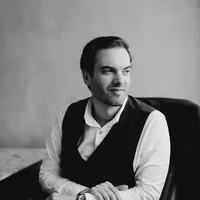
Dr. Thiago Perfeito
CRM-DF 23199 · Aesthetic and Regenerative Medicine
Physician with more than 10 years of practice in aesthetic and regenerative medicine. Master's degree in Aesthetic Medicine (2024). International training at Harvard Medical School and Mayo Clinic. Member of ASLMS, A4M, AMS, and NYAS. Practicing in Brasília, Lago Sul.
Learn about Dr. Thiago →Frequently asked questions about Bilingual concierge aesthetic clinic
-
What does bilingual concierge really mean?
It means the entire clinical encounter — history, assessment, procedure, consent, and written documentation — is conducted in English by the physician, not interpreted. Clinical records are produced in English with international product names, ICD-10 codes where relevant, and dosage and anatomical detail sufficient for a receiving practitioner abroad to understand what was performed. Post-procedure follow-up is also available in English via WhatsApp. The intent is that a practitioner in London, Washington, or Geneva can read the records and continue care without requiring translation or clarification from the patient.
-
How is privacy protected at premium clinics?
Brazil's LGPD (Lei Geral de Proteção de Dados) is broadly equivalent to GDPR in its protections: data subject access rights, lawful basis requirements, breach notification, and data minimisation. At the clinic level, practical discretion measures include no shared public waiting room, private scheduling with optional name alternatives, and a firm separation between before-and-after documentation consent and social media consent. For diplomatic and international professional patients, social media use is not requested as a default — it requires a specific affirmative opt-in, applied without exception by all clinical staff.
-
Are international product brands available locally?
Yes. Allergan (Botox, Juvederm), Galderma (Sculptra, Restylane, Dysport), Merz (Radiesse, HarmonyCa, Xeomin), and InMode (Morpheus8) all operate in Brazil under ANVISA regulation, with the same manufacturing quality standards as supply to the EU or US. If you have an existing protocol — Sculptra sessions begun in Paris, a Morpheus8 series started in New York — the products and devices are identical, and continuity is straightforward. Treatment records from the clinic specify product, batch, dilution, anatomical targets, and device parameters to support handover to a practitioner abroad.
-
How do international patients continue care abroad?
Every appointment produces a written summary in English specifying what was performed, which product was used (international trade name, concentration, and volume), anatomical placement, and the recommended timing for maintenance. For energy-based treatments, device parameters and handpiece settings are documented. This record is formatted for legibility by a receiving practitioner internationally — not just for a Brazilian medical file. For ongoing protocols, a written maintenance plan with timing windows and product-class specifications is provided, so a practitioner in your home country can continue the protocol without needing to contact the originating clinic.
-
What is the typical first consultation like?
Approximately 45-60 minutes, conducted entirely in English. It begins with your own description of your concerns and objectives — unprompted, because how a patient frames their concern is clinically informative. Physical assessment follows, covering anatomy, skin quality, and volumetric patterns relevant to the areas discussed. Dr. Thiago then presents a written assessment: what is anatomically occurring, what treatment options exist, which is recommended and why, realistic expected outcomes, and session timing. No treatment is performed at the first consultation unless explicitly requested and clinically straightforward. You leave with a written treatment plan in English and no obligation to proceed.
Book your consultation in Lago Sul
Consultations are conducted in English. Written treatment plans are provided at the end of the first appointment. Located inside Deck Brasil, QI 11 Bloco O Sala 115, Lago Sul — 15 minutes from the embassy district. Contact via WhatsApp in English.