Quiet luxury in aesthetic medicine: editorial elegance vs Instagram aesthetic in Brazil
The most sophisticated result in aesthetic medicine is the one no one can identify. Quiet luxury is not a trend — it is the clinical translation of restraint, precision, and a deep understanding of anatomy over volume.
Book ConsultationWhat quiet luxury means in aesthetic medicine — and why it is not the same as doing less
Quiet luxury in aesthetic medicine is not about doing less — it is about doing precisely what is necessary and nothing more. The concept, borrowed from fashion's shift toward investment-grade restraint over logo-heavy display, translates into clinical practice as a philosophy of result: the face that looks rested, vital, and fully itself rather than the face that announces a procedure.
In fashion, quiet luxury is associated with Loro Piana cashmere rather than branded streetwear, with a perfectly cut blazer rather than embellished excess. In aesthetic medicine, the equivalent is a bioestimulator protocol that firms and regenerates without adding volume, a conservative dose of hyaluronic acid that restores a hollow rather than inflates a contour, or a Morpheus8 session that remodels collagen architecture from within without altering surface expression. The intervention is real, the evidence is clinical, but the result reads as the patient's own face at its best.
This stands in contrast to what has become known as the Instagram Standard — results engineered to be legible at 20 centimeters on a smartphone screen: arched brows, forward-projected lips, inflated cheekbones, eliminated nasolabial folds. The Instagram Standard is calibrated for content, not for life. It optimizes for one facial position (the selfie angle) rather than for three-dimensional movement, expression, and the full spectrum of daily light conditions.
The Editorial Standard, by contrast, is what appears on the cover of Vogue rather than on a treatment clinic's social feed. Faces that communicate authority, presence, and a kind of effortless maturity. Sofia Coppola, whose aesthetic direction consistently privileges understatement. Cate Blanchett, whose visible aging has been managed with extraordinary refinement over decades. Tilda Swinton, whose particular beauty is inseparable from its singularity. Jennifer Aniston, who has spoken publicly about taking care of her skin through disciplined preventive protocols rather than corrective volume. These are editorial references — the clinical work that may or may not exist behind each face is secondary to the overarching result: a person who looks entirely like themselves, at their best.
For Brazilian aesthetic medicine, which has historically occupied a complex position — technically among the most advanced in the world, culturally prone at times to overtreatment — quiet luxury represents a meaningful recalibration. It asks the same question Ivo Pitanguy asked in the early decades of Brazilian plastic surgery: what does this face need to be more fully itself? The answer, then as now, is rarely more volume. It is almost always better structure, better quality, and better proportion.
The technical translation: how anti-overfilling philosophy becomes clinical protocol
Anti-overfilling is not a preference — it is a clinical position with anatomical reasoning behind it. Understanding why the Editorial Standard produces superior long-term results requires understanding what overfilling actually does to facial anatomy.
The face ages in four simultaneous dimensions: bone resorption alters the structural scaffold; fat compartments deflate and descend; collagen density decreases, thinning the dermis; and skin laxity follows soft-tissue descent. The Instagram Standard addresses one of these dimensions — volume loss — while ignoring or actively worsening the others. Excess hyaluronic acid added to compartments that have not actually lost volume creates the characteristic "pillow face": a uniformly rounded surface that erases the architectural shadows and highlights that give a face its character and three-dimensionality.
The quiet luxury approach works across all four dimensions simultaneously:
- Biostimulators over volumizers where possible. Sculptra (poly-L-lactic acid), Radiesse (calcium hydroxyapatite), and Profhilo (high-concentration free hyaluronic acid) stimulate the body's own collagen and elastin production rather than adding foreign volume. The result peaks at 6 months and lasts 12-18 months. The face densifies, firms, and brightens from within. No one can identify what changed — they only notice that the patient looks better.
- Regeneration over substitution. Energy-based devices — Morpheus8, Fotona 4D, Ultraformer MPT (HIFU) — remodel existing collagen architecture, retract tissue, and improve skin quality without adding external material. When combined with biostimulators, they address the laxity and texture dimensions of aging that injectables alone cannot reach.
- Conservative hyaluronic acid, anatomically precise. When volume restoration is clinically indicated — a hollowed temple, a deepened tear trough, a retracted mandibular angle — hyaluronic acid is applied in the correct anatomical plane, at the correct depth, in conservative doses. The goal is structural support, not inflation. Mobility is preserved at every point.
- Facial mobility as a quality metric. A face that has been treated according to the Editorial Standard moves fully: the smile is unobstructed, the expressions are fluid, the eyes animate normally. Restricted mobility is one of the earliest clinical signs of overtreatment and one of the most difficult to reverse.
This protocol framework is more technically demanding than volumization alone. It requires a thorough understanding of facial anatomy in three dimensions, precise knowledge of where each tissue layer lies and how it ages, and the clinical restraint to stop before the point that produces visible treatment rather than visible improvement.
The shift from volumizer-first to biostimulator-first is also supported by an emerging body of clinical evidence. Published data on poly-L-lactic acid (Sculptra) demonstrates progressive neocollagenesis confirmed histologically, with collagen density improvements measurable at 12 months post-treatment. Calcium hydroxyapatite (Radiesse) has shown dual action — immediate structural effect and sustained collagen induction — in multiple peer-reviewed studies including those published in the Journal of Drugs in Dermatology.
How to identify a clinic that genuinely practices quiet luxury — and why Brazilian aesthetic medicine has always carried this tradition
The quiet luxury philosophy did not originate in a European fashion editorial — it has roots in Brazilian aesthetic medicine's own highest tradition. Ivo Pitanguy, the surgeon who placed Brazil on the global aesthetic medicine map in the 1960s and built its international reputation over five decades, operated from a single guiding principle: surgery should make a person look more like themselves, never less. His results were characterized by the absence of surgical stigma, not by the presence of a visible transformation. That principle — refinement as the highest technical ambition — is exactly what quiet luxury describes.
The tension between that tradition and the Instagram Standard is real and visible in contemporary Brazilian practice. The technology available today is extraordinary — devices from Israel, South Korea, Slovenia, and the United States have given aesthetic medicine tools that Pitanguy could not have imagined. Used in calibrated doses with sound anatomical understanding, these technologies can achieve the Pitanguy ideal non-surgically. Used to satisfy social-media demand for immediate, legible change, the same technologies produce the overfilled, over-paralyzed, over-symmetrized results that the Editorial Standard explicitly rejects.
When evaluating a clinic, the following are reliable indicators that its practice aligns with the quiet luxury philosophy:
- The initial consultation prioritizes assessment over indication — the clinician maps what the patient actually needs before suggesting any treatment.
- The clinic's visual references are diverse, mature, and mobile rather than uniformly smooth and static.
- The protocol favors biostimulators as the primary tool, with volumizers used selectively and conservatively.
- The clinician explicitly discusses what the patient does not need as part of the consultation.
- Before-and-after documentation shows results that are difficult to identify as treated — the patient simply looks better.
The consultation at Clínica INTI, Lago Sul, Brasília, is structured precisely around these principles. Dr. Thiago Perfeito (CRM-DF 23199) practices Regenerative and Aesthetic Medicine with training from Mayo Clinic, Harvard Medical School, and the American Society for Laser Medicine and Surgery (ASLMS). The protocol design integrates Morpheus8, Fotona 4D, Ultraformer MPT, Sculptra, Radiesse, Profhilo, and conservative hyaluronic acid in individualized combinations calibrated to deliver Editorial Standard results — improvement that reads as vitality, not as treatment.
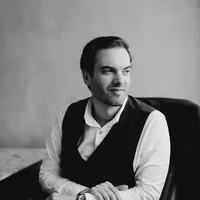
Dr. Thiago Perfeito
CRM-DF 23199 · Aesthetic and Regenerative Medicine
Physician with more than 10 years of practice in aesthetic and regenerative medicine. Master's degree in Aesthetic Medicine (2024). International training at Harvard Medical School and Mayo Clinic. Member of ASLMS, A4M, AMS, and NYAS. Practicing in Brasília, Lago Sul.
Learn about Dr. Thiago →Frequently asked questions about Editorial natural aesthetic medicine
-
What is quiet luxury in aesthetic medicine?
Quiet luxury in aesthetic medicine refers to a clinical philosophy that prioritizes refined, non-detectable improvement over visible transformation. Borrowed from the fashion concept of investment-grade understatement over logo-heavy display, it translates into practice as the pursuit of the Editorial Standard rather than the Instagram Standard: a face that reads as rested, vital, and fully itself, without any legible trace of procedure. The technical tools are real and rigorous — biostimulators, energy-based devices, conservative injectables — but the result is characterized precisely by what cannot be identified from the outside.
-
How does the Brazilian natural-result tradition fit into the quiet luxury philosophy?
Brazil's highest tradition in aesthetic medicine — rooted in Ivo Pitanguy's founding principle that intervention should make a person look more fully themselves, never less — is the original expression of what quiet luxury describes. The tension in contemporary Brazilian practice is not between quiet luxury and some alternative Brazilian approach; it is between that founding tradition and the Instagram Standard, which arrived with social media and democratized demand for visible, immediate results. The quiet luxury philosophy is, in that sense, a return to the discipline that gave Brazilian aesthetic medicine its international reputation.
-
Why is anti-overfilling considered the new premium standard?
Anti-overfilling is the premium standard because it is technically more demanding and produces results that mature rather than depreciate. Overfilling addresses one dimension of facial aging — volume loss — while ignoring or actively worsening the others: tissue laxity, collagen density, and skin quality. The anti-overfilling approach uses biostimulators to regenerate the patient's own collagen, energy-based devices to remodel tissue architecture, and conservative volumizers applied only where anatomically indicated. The result is a face that densifies and firms from within, preserves mobility, and reads as natural vitality for 12 to 18 months or longer.
-
Who are the editorial references — Sofia Coppola, Cate Blanchett, Tilda Swinton, Jennifer Aniston — in this context?
These are editorial references — figures whose public presence over decades demonstrates what the Editorial Standard looks like in practice: faces that communicate presence, authority, and individuality rather than procedure. Sofia Coppola's aesthetic direction consistently privileges restraint. Cate Blanchett's visible aging has been managed with extraordinary refinement. Tilda Swinton's particular beauty is inseparable from its singularity. Jennifer Aniston has publicly discussed disciplined skin-care and preventive protocols over the years. None of these references imply that any specific procedure was performed — they are used here strictly as cultural anchors for the aesthetic result that the quiet luxury philosophy pursues: refined, non-detectable, fully personal.
-
How do I find a clinic in Brazil that genuinely practices the quiet luxury philosophy?
Several indicators distinguish a practice that genuinely follows the Editorial Standard. The initial consultation maps what the patient actually needs before suggesting any treatment. The protocol favors biostimulators as the primary tool, with volumizers applied selectively and conservatively. The clinician explicitly discusses what the patient does not need. Visual references in the clinic's portfolio are diverse, mature, and mobile rather than uniformly smooth. Before-and-after documentation shows results that are difficult to identify as treated. At Clínica INTI in Lago Sul, Brasília, Dr. Thiago Perfeito (CRM-DF 23199) structures every consultation around these principles.
Schedule a quiet luxury assessment in Brasília
Individualized clinical consultation focused on what your face genuinely needs — and on what it does not. Dr. Thiago Perfeito, CRM-DF 23199, Clínica INTI, Lago Sul.