Where do celebrities get their aesthetic treatments?
The physicians who treat the world's most scrutinised faces share a common philosophy: restraint, longitudinal planning and an understanding of anatomy that makes intervention invisible. This standard is not confined to Manhattan or Mayfair.
Book ConsultationWhich clinics and physicians do celebrities actually use?
Celebrities who appear refreshed rather than altered overwhelmingly work with physicians who prioritise anatomy over volume — practitioners based in Manhattan, Beverly Hills, Mayfair, Paris and Zurich who have built reputations precisely by making their work impossible to detect. Names such as Dr. Steven Levine (New York), Dr. Daniel Ezra (London) and Dr. Raj Acquilla (London) appear regularly in press coverage in titles including Page Six, the Daily Mail and Allure — not because they operate the most aggressive protocols, but because their patients continue to look like themselves.
Kris Jenner's deep-plane facelift, widely covered in the international press and attributed to Dr. Steven Levine, illustrates the point. Estimates published by Page Six and the Daily Mail place the procedure in the range of US$ 100,000–300,000 — a figure that reflects operating-room fees, anaesthesia, surgeon's expertise and the infrastructure of a top-tier New York surgical centre, not a benchmark that translates directly to other markets. What travels is the technique: the deep-plane approach addresses the SMAS layer and the retaining ligaments rather than simply tightening skin, which is why the result maintains natural facial movement.
On the non-surgical side, reportage in Allure and Vogue has consistently linked Jennifer Aniston's skin quality to polynucleotide (PDRN) therapy — a regenerative injectable derived from salmon DNA that stimulates fibroblast activity and improves dermal hydration. The Kardashian family's association with Morpheus8 radiofrequency microneedling on the abdomen and face was documented widely across entertainment media. These are not endorsements — they are editorial hooks that confirm a broader clinical reality: the modalities in question have moved from experimental to standard-of-care in premium practice globally.
The common denominator is not geography. It is the physician's ability to read a face, design a multi-year plan and resist the temptation to over-treat. That capacity exists outside New York and London.
What procedures do celebrities actually undergo — and why do the results look natural?
The naturalness of a well-executed aesthetic result is not accidental. It derives from a specific clinical philosophy endorsed by organisations including the International Society of Aesthetic Plastic Surgery (ISAPS), the American Society for Dermatologic Surgery (ASDS) and the British Association of Aesthetic Plastic Surgeons (BAAPS): address structure before surface, restore before augment, and plan maintenance from the outset.
The procedures most consistently cited in verified press coverage of celebrity aesthetic medicine include:
- Neuromodulation (botulinum toxin) — used in conservative doses to soften dynamic lines without eliminating expression. The “frozen” appearance associated with older techniques results from excess units, not from the molecule itself.
- Biostimulators of collagen — agents such as calcium hydroxyapatite (Radiesse) and poly-L-lactic acid (Sculptra) induce progressive neocollagenesis over weeks and months, producing gradual density and firmness rather than sudden volume.
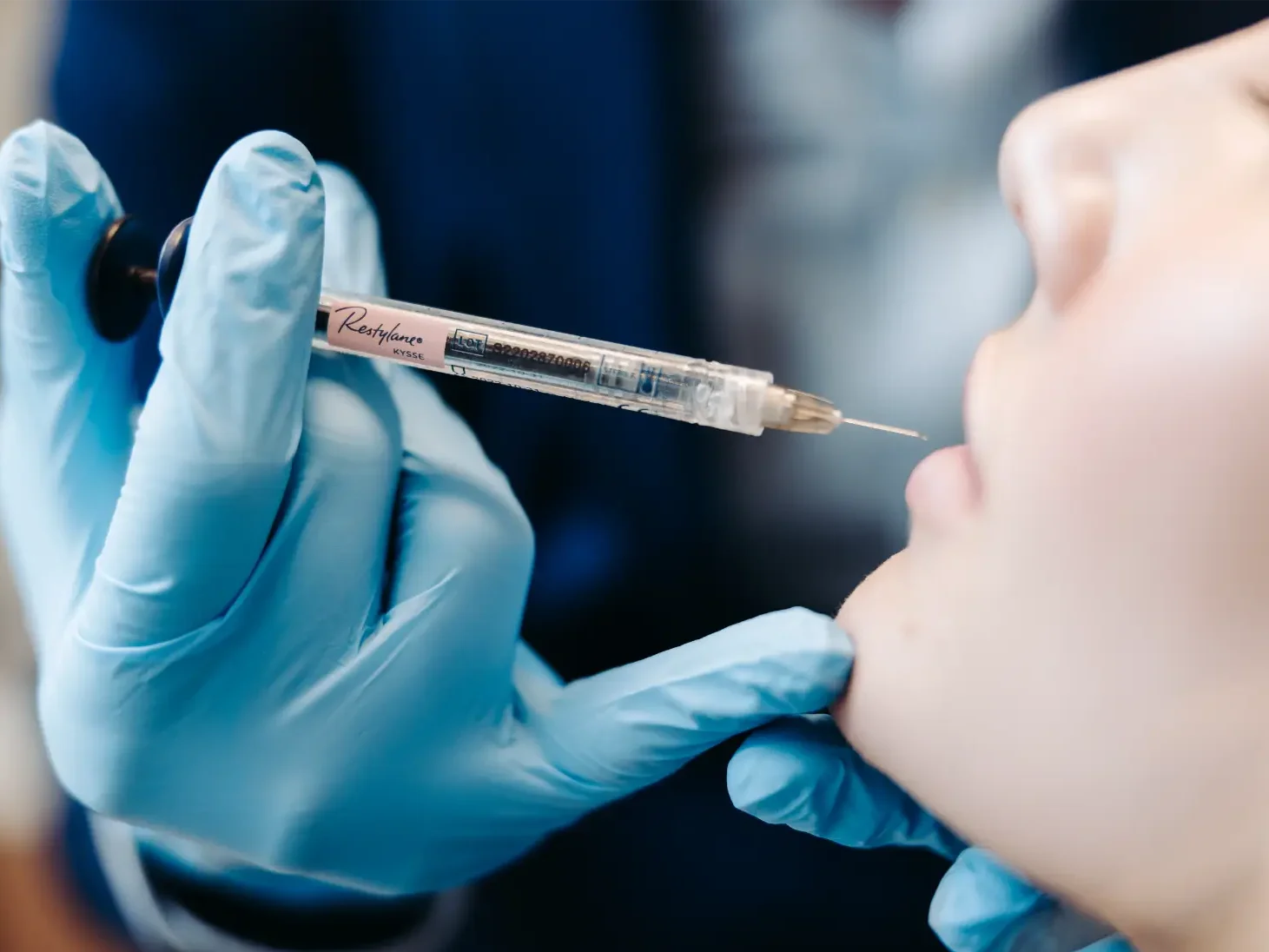
- High-density hyaluronic acid fillers for selective volumetric restoration — applied to mid-face, temples and mandibular angles to re-establish structural support lost with age. The discipline is in knowing where not to inject.
- Radiofrequency microneedling (Morpheus8) — fractional energy delivered into the dermis and subdermis remodels collagen, tightens lax tissue and addresses textural irregularities; the Kardashian association with this device is one of the most documented in popular press.
- Regenerative injectables (PDRN / polynucleotides) — increasingly cited in coverage of Hollywood skin-quality protocols; stimulates fibroblasts and improves dermal water-binding capacity.
- Surgical intervention (lifting procedures) — deep-plane facelift, blepharoplasty and endoscopic brow lift remain the most powerful tools for structural repositioning; their integration into a longitudinal non-surgical programme is what keeps results sustainable.
- Fat grafting (lipofilling) — autologous fat transferred to depleted facial compartments provides both volume and regenerative benefit via the adipose-derived growth factors present in the graft.
What ties these together is not novelty — most have decades of peer-reviewed literature behind them. It is the physician’s ability to sequence them appropriately across time, which is why the best outcomes are built over years, not extracted from a single appointment.
Is this standard of care available in Brazil — and specifically in Brasília?
The gap between what is practised in premium global centres and what is available in Brazil has narrowed substantially over the past decade. Brazilian aesthetic medicine has one of the highest per-capita rates of cosmetic procedures globally, according to ISAPS survey data, and the country has produced physicians who train at international fellowship level, work with the same product portfolio available in London and New York, and operate with equivalent clinical infrastructure.
For diplomats and expatriates in Brasília — a population accustomed to accessing care in Washington, D.C., Geneva, Singapore or London — the relevant question is not whether the techniques exist here, but whether the clinical philosophy matches what they are used to. The answer depends entirely on the specific physician, not on the country.
Dr. Thiago Perfeito (CRM-DF 23199) practises aesthetic and regenerative medicine at the INTI clinic in Lago Sul, Brasília, with a protocol architecture that mirrors the longitudinal, restraint-based approach described above. The modalities available include botulinum toxin, hyaluronic acid fillers, biostimulators (calcium hydroxyapatite, poly-L-lactic acid, hybrid injectables), Morpheus8 radiofrequency microneedling, Fotona laser, PDRN regenerative therapy, Exocube (exosome-based protocol), fat grafting, and thread-based suspension. Treatment plans are built around the patient’s anatomy, treatment history and long-term objective — not around a fixed menu.
The international cost benchmarks cited in press coverage — US$ 100,000–300,000 for a deep-plane facelift with a top New York surgeon, for example — reflect infrastructure and market conditions specific to those cities. They are not the standard of charge in Brasília, where the same technical approach is available at a different price point, without compromising clinical quality. For patients comparing options across capitals, a personalised consultation is the appropriate starting point.
Related reading:
Dr. Thiago Perfeito
CRM-DF 23199 · Aesthetic and Regenerative Medicine
Physician with more than 10 years of practice in aesthetic and regenerative medicine. Master's degree in Aesthetic Medicine (2024). International training at Harvard Medical School and Mayo Clinic. Member of ASLMS, A4M, AMS, and NYAS. Practicing in Brasília, Lago Sul.
Learn about Dr. Thiago →Frequently asked questions about Celebrity aesthetic medicine
-
Which doctors treat Hollywood celebrities?
The physicians most consistently named in verified international press coverage — publications including Page Six, the Daily Mail, Allure and Vogue — include Dr. Steven Levine (New York, known for deep-plane facelift), Dr. Daniel Ezra (London, oculoplastic surgery) and Dr. Raj Acquilla (London, injectable artistry). They are characterised not by aggressive intervention but by restraint and structural understanding. The names change over time; the clinical philosophy — anatomy-first, longitudinal, less is more — remains constant across the physicians whose work holds up to scrutiny.
-
What do celebrity treatments cost?
International press estimates for high-profile procedures reflect city-specific infrastructure and surgeon-specific premiums. A deep-plane facelift with a top New York surgeon — the Kris Jenner case, cited in Page Six and the Daily Mail — has been estimated at US$ 100,000–300,000. Non-surgical annual protocols combining neuromodulation, biostimulators and energy devices in premium London or New York clinics typically run US$ 20,000–80,000 per year. These figures are not directly transposable to Brasília, where equivalent technical protocols are available at a different price point. Local cost is best discussed during a personalised clinical assessment.
-
What procedures do celebrities actually get?
Based on verified press coverage and editorial commentary, the most consistently documented procedures include botulinum toxin (conservative doses for expression softening), hyaluronic acid fillers for selective volumetric restoration, biostimulators of collagen (Radiesse, Sculptra), radiofrequency microneedling (Morpheus8 — extensively documented in coverage of the Kardashian family), polynucleotide (PDRN) regenerative therapy (linked to Jennifer Aniston in Allure), fat grafting, and surgical lifting procedures for structural repositioning. Most verified celebrity protocols combine several of these modalities over months or years rather than delivering a single dramatic intervention.
-
Why do their results look natural?
Natural-looking results in aesthetic medicine reflect clinical restraint, anatomical literacy and longitudinal planning — not the absence of intervention. The physicians whose celebrity patients continue to look like themselves work to the principle of restoring what has been lost rather than augmenting what was never there. They treat facial compartments in the correct sequence, use biostimulators to rebuild collagen progressively rather than adding volume acutely, and design maintenance intervals that prevent the cumulative over-correction that produces an obvious, operated appearance. Organisations including ISAPS and BAAPS codify this philosophy in their consensus guidelines.
-
Is that standard available in Brazil?
Yes. The same product portfolio, device categories and procedural techniques available at premium clinics in Manhattan, Mayfair and Zurich are practised in Brazil, including in Brasília. The clinical philosophy — longitudinal planning, anatomical prioritisation, restraint — is carried by individual physicians regardless of geography. For diplomats and expatriates in Brasília accustomed to premium international care, the relevant criterion is the physician's training, track record and approach, not the country. A personalised consultation with Dr. Thiago Perfeito (CRM-DF 23199) at the INTI clinic in Lago Sul is the appropriate starting point for patients evaluating their options.
Discuss your case with Dr. Thiago Perfeito
Personalised aesthetic and regenerative medicine in Brasília. INTI clinic, Lago Sul. CRM-DF 23199.