Why have aesthetic medicine in Brazil: a guide for expats comparing USA, Europe, and Brazilian options
A grounded, honest comparison of aesthetic medicine in Brazil versus the USA and Europe: regulatory framework, product equivalency, cost structure, physician training, and a practical decision framework for international patients considering care in Brasília.
Book ConsultationThe Brazilian aesthetic medicine landscape: heritage, regulation, and the clinical reality
Brazil has one of the most active and internationally recognised aesthetic medicine ecosystems in the world. Understanding why — and where that recognition has limits — is the starting point for any international patient making an informed decision about where to receive care.
The institutional foundation is real. The Brazilian Society of Plastic Surgery (SBCP — Sociedade Brasileira de Cirurgia Plástica) is one of the oldest and most influential professional bodies in global plastic and reconstructive surgery. Brazil consistently ranks among the top three countries worldwide for total aesthetic procedures performed, a statistic tracked annually by the International Society of Aesthetic Plastic Surgery (ISAPS). The legacy of Professor Ivo Pitanguy — who trained generations of surgeons at the Pontifical Catholic University of Rio de Janeiro and whose work on body contouring and facial anatomy is cited in global surgical literature — established a culture of high-volume, high-stakes surgical training that has since extended into the minimally invasive domain.
Regulatory oversight of aesthetic products in Brazil is managed by ANVISA (Agência Nacional de Vigilância Sanitária), the Brazilian health surveillance agency. ANVISA operates under a framework structurally comparable to the FDA in the United States and the EMA in Europe: it reviews clinical safety and efficacy data submitted by manufacturers before granting market authorisation. The major injectable products used in Brazilian aesthetic practice — hyaluronic acid fillers from the Juvéderm and Restylane families, botulinum toxin preparations (Botox, Dysport, Xeomin), biostimulators (Sculptra, Radiesse, HarmonyCa), and energy-based devices (Morpheus8, Fotona, Ultraformer) — are the same globally distributed products supplied by Allergan Aesthetics, Galderma, Merz Aesthetics, and InMode. ANVISA-registered products are not reformulated for the Brazilian market; they are the same manufacturers, same batch testing standards, same cold-chain requirements.
The honest caveat — and it matters — is that Brazil's size and regulatory infrastructure mean that the standard of practice varies considerably across the country and across practitioners. World-class clinical care coexists with a long tail of undertrained practitioners, substandard product sourcing, and inadequate patient selection. This is not unique to Brazil: the same heterogeneity exists in the United States and across Europe. The relevant question is not "is Brazil safe?" in the abstract — it is "how do I identify a qualified practitioner?"
For international patients in Brasília specifically, the context is differentiated from São Paulo or Rio de Janeiro. The city's diplomatic infrastructure creates a resident population accustomed to international standards of care, and a subset of physicians who trained abroad or maintain international affiliations have oriented their practice accordingly. The competitive pressure to provide bilingual, internationally benchmarked care in Brasília is real and measurable.
USA, Europe, and Brazil compared: cost, products, training, and where each leads
A structured comparison across four dimensions — cost, product equivalency, physician training, and regulatory rigour — gives international patients a more useful framework than a single summary judgment about which country is "better." The answer is context-dependent, and honest framing serves patients better than marketing.
Cost structure
The cost advantage of aesthetic medicine in Brazil relative to the United States and the United Kingdom is substantial and consistent, typically ranging from 40 to 60 percent below comparable private practice pricing in major US or UK cities for equivalent procedures performed by equivalently trained practitioners.
Indicative reference ranges for Brasília in 2026 (BRL, including product and physician fee):
- Botulinum toxin — full face (3 areas): R$ 1,900-4,000 per session (approximately USD 370-790 at current exchange, versus USD 500-1,500+ in New York or Los Angeles private practice)
- Hyaluronic acid filler per syringe: R$ 1,900-2,800 (approximately USD 370-555, versus USD 700-1,400+ in the USA)
- Sculptra (PLLA biostimulator) per session: R$ 2,900-3,900 (approximately USD 575-775, versus USD 1,200-2,500 in US private practice)
- Morpheus8 (radiofrequency microneedling, face): R$ 6,000-9,000 per session (approximately USD 1,190-1,785, versus USD 2,000-4,000 in the USA)
- Fotona 4D (multi-pass Nd:YAG/Er:YAG protocol): R$ 4,500-5,500 per session (approximately USD 890-1,090, versus USD 2,000-3,500 in major US markets)
USD conversion is approximate and exchange-rate dependent; figures are illustrative, not contractual.
Product equivalency
The product landscape in ANVISA-registered Brazilian clinics mirrors the product landscape in FDA- and CE-regulated markets. Allergan Aesthetics supplies Botox and the Juvéderm family globally under the same manufacturing standards. Galderma distributes Dysport, Sculptra, and the Restylane family. Merz Aesthetics distributes Radiesse, Belotero, and Xeomin. InMode's Morpheus8 is the same device whether installed in Miami or Brasília. A physician using ANVISA-registered products from these manufacturers is using the same source material available in the USA or EU.
Physician training landscape
Medical training in Brazil follows a six-year undergraduate medical degree followed by residency programmes and, for those who pursue specialisation, fellowship training. The Conselho Federal de Medicina (CFM) registers all licensed physicians; an active CRM is the foundational credential that authorises a physician to practise medicine in Brazil, including aesthetic procedures. In Brazilian law, any physician with an active CRM may perform aesthetic procedures — the decisive variables are specific training in the procedure, documented clinical experience, and the adequacy of the facility. For surgical procedures, the relevant criteria are documented surgical training, case volume, and access to a credentialed surgical facility. For minimally invasive aesthetic medicine, practitioner assessment requires looking at procedure-specific training history, technique certifications, and clinical output rather than a title or society membership.
Brazilian physicians with international fellowship training at US or European institutions are common in major cities and bring direct exposure to practice standards in those markets. Where the USA leads: depth of subspecialty surgical training at academic medical centres, robust malpractice litigation creating systematic documentation culture, and longer history of evidence-based aesthetic medicine curricula at residency level. Where Brazil is competitive: volume of aesthetic procedure experience in training, active participation in international clinical societies (ISAPS, IMCAS), and access to the same product and device ecosystem at a lower cost base that attracts patients — which in turn generates higher per-practitioner case volume than many US or European practices.
Regulatory rigour
ANVISA's product approval framework is structurally rigorous and comparable in scope to FDA and EMA processes. Where systemic regulatory gaps exist in Brazil — as in most countries — they tend to be in enforcement at the point of care: supervising who performs injections, in what setting, and under what clinical standard. This is an enforcement and market structure question, not a product quality question, and it points back to practitioner selection as the decisive variable.
Who should consider care in Brazil — and how to select well
Aesthetic medicine in Brazil is a sound choice for international patients who select carefully, plan the logistical realities honestly, and maintain realistic expectations about follow-up care continuity. It is not a universally better choice than care in the USA or Europe — it is a competitive option in specific circumstances.
Decision framework
Brazil is well-suited for patients who:
- Are resident in or regularly visiting Brasília (diplomatic posting, extended work assignment, family ties) and can plan follow-up appointments as part of their normal schedule
- Are considering elective single-session procedures where continuity of care is less critical — neuromodulators, single-filler sessions, or consultation-and-treat visits
- Have researched practitioners rigorously in advance and have identified a specific physician whose training, clinical output, and language capability meet their requirements
- Understand that a multi-session protocol (biostimulators, energy-based devices, regenerative injectables) requires multiple visits and that travel costs and logistics must be factored into the true cost comparison
- Are seeking a second clinical opinion on a treatment plan proposed elsewhere
Brazil is less suited for patients who:
- Require a complex multi-session protocol with closely spaced intervals and cannot commit to being in Brasília for the duration
- Have had complications from prior treatments that require specialist management — these patients need continuity with a physician who has their full clinical history
- Are prioritising proximity to home for follow-up above cost savings
Verification steps before choosing a physician in Brazil
The following steps apply regardless of country — they are the standard due diligence for selecting any aesthetic medicine practitioner:
- Confirm CFM registration. Every licensed physician in Brazil has a CFM registration number, publicly searchable on the CFM website. Verify that the physician is registered and in good standing.
- For surgical procedures, verify surgical training and facility. For any surgical procedure, what matters is documented surgical training, case volume, and access to a credentialed surgical facility — not a specific society membership.
- Ask about product sourcing explicitly. A physician confident in their product supply chain will confirm the manufacturer, lot documentation practice, and cold-chain handling without hesitation. Evasion on this question is a red flag.
- Assess clinical consultation quality. A qualified practitioner conducts a structured clinical assessment before proposing any treatment — including a full medical history, anatomical assessment with facial photography, and a clearly explained treatment rationale.
- Review before-and-after documentation critically. Consistent documentation of anonymised patients across a range of anatomies and treatment types reflects clinical experience.
- Evaluate English-language capability directly. For international patients, the ability to communicate clinical history, concerns, and informed consent in your language is a clinical safety issue, not merely a convenience.
International follow-up care
Patients returning home after treatment should receive written documentation of the products used (manufacturer, product name, concentration or formulation, volume per site), the injection technique, and the follow-up schedule. This documentation allows a treating physician in any country to manage continuity of care or address any delayed complication. Request this documentation as a standard at any clinic — the practice of providing it is itself a quality signal.
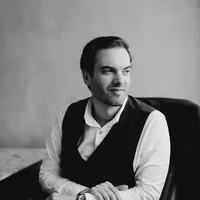
Dr. Thiago Perfeito
CRM-DF 23199 · Aesthetic and Regenerative Medicine
Physician with more than 10 years of practice in aesthetic and regenerative medicine. Master's degree in Aesthetic Medicine (2024). International training at Harvard Medical School and Mayo Clinic. Member of ASLMS, A4M, AMS, and NYAS. Practicing in Brasília, Lago Sul.
Learn about Dr. Thiago →Frequently asked questions about Aesthetic medicine in Brazil for international patients
-
Is aesthetic medicine in Brazil safer than in the USA or Europe?
Safety in aesthetic medicine is primarily a function of practitioner selection, product sourcing, and clinical setting — not country of treatment. Brazil has a rigorous regulatory framework (ANVISA) comparable in scope to the FDA and EMA, and the major injectable and energy-based device brands used in Brazilian practice are identical to those distributed in the USA and Europe by the same manufacturers. The relevant heterogeneity — world-class practitioners coexisting with undertrained ones — exists in every country. Selecting a physician with verifiable CFM registration, documented clinical training, and transparent product sourcing addresses the primary safety variables regardless of where the clinic is located.
-
How does the cost of aesthetic medicine in Brazil compare to the USA and UK?
Comparable procedures performed by equivalently trained practitioners in Brasília typically cost 40 to 60 percent less than in major US or UK private practice. Illustrative 2026 reference ranges in Brasília: botulinum toxin full face R$ 1,900-4,000 (approximately USD 370-790); hyaluronic acid filler per syringe R$ 1,900-2,800 (approximately USD 370-555); Sculptra per session R$ 2,900-3,900 (approximately USD 575-775); Morpheus8 face per session R$ 6,000-9,000 (approximately USD 1,190-1,785). The differential reflects lower operating overhead, not differences in product quality.
-
What is the SBCP and how do I verify a physician's credentials in Brazil?
The SBCP (Sociedade Brasileira de Cirurgia Plástica — Brazilian Society of Plastic Surgery) is the nationally recognised professional body for plastic surgeons in Brazil and a member society of ISAPS (International Society of Aesthetic Plastic Surgery). In Brazil, any physician with an active medical licence (CRM — Conselho Federal de Medicina) is legally authorised to perform aesthetic procedures, regardless of specialty title. What differentiates practitioners is specific training in the procedure, documented clinical experience, and the adequacy of the facility — not membership in any single society. For surgical procedures, confirm that the physician has surgical training, a credible case volume, and operates in a credentialed surgical facility. The most important verification step for any practitioner is confirming their CFM registration number is active and in good standing, publicly searchable at cfm.org.br. Ask directly about procedure-specific training, case volume, and product sourcing.
-
How does ANVISA regulate aesthetic medicine products in Brazil?
ANVISA (Agência Nacional de Vigilância Sanitária) is Brazil's health surveillance agency and reviews clinical safety and efficacy data submitted by manufacturers before granting market authorisation for aesthetic injectables and devices. The major brands used in Brazilian aesthetic practice — Juvéderm, Restylane, Botox, Dysport, Xeomin, Sculptra, Radiesse, HarmonyCa, Morpheus8, Fotona — are the same globally distributed products from Allergan Aesthetics, Galderma, Merz Aesthetics, and InMode, manufactured to the same standards as products distributed in the USA and EU. ANVISA-registered products are not reformulated for the Brazilian market.
-
How should I plan for follow-up care if I return home after treatment?
Request written clinical documentation at the time of your appointment: the product name, manufacturer, formulation, volume administered per site, injection technique, and recommended follow-up schedule. This allows any physician in your home country to manage continuity of care or address any delayed concern without guessing at what was used. For multi-session protocols — biostimulators, energy-based devices, regenerative injectables — discuss the full treatment calendar before the first session so the sequence aligns with your time in Brasília. Physicians experienced with the diplomatic and expatriate community in Brasília are accustomed to designing protocols around posting schedules and intermittent return visits.
Schedule a consultation in Brasília
An individual clinical assessment with Dr. Thiago Perfeito (CRM-DF 23199) at INTI, Lago Sul. Conducted in English. No commitment to proceed required.