Aesthetic medicine in Brasília vs Rio de Janeiro: how to choose
Rio de Janeiro and Brasília offer different clinical landscapes, patient profiles, and logistical contexts. Neither city is universally better — but one may be better for you.
Book ConsultationTwo cities, two clinical scenes
Any honest comparison between aesthetic medicine in Brasília and Rio de Janeiro has to begin with a clear premise: neither city is universally superior. They have different clinical traditions, different patient profiles, and different infrastructure contexts. The international patient who chooses well is the one who understands which of those contexts matches what she or he is actually looking for.
Rio de Janeiro's prominence in Brazilian aesthetics is historical and substantial. It is the home of Ivo Pitanguy, widely regarded as the founding figure of modern aesthetic surgery, and the Pitanguy Institute continues to train plastic surgeons from around the world. The city has a high concentration of experienced surgical practitioners with extensive training in aesthetic surgery, a long tradition of high-volume surgical practice, and cultural aesthetics shaped by beach culture — a visibility-oriented approach to the body that has influenced both patient demand and clinical supply for decades.
The practical consequence is that Rio has deep surgical infrastructure. If a patient's primary objective is a significant surgical procedure — rhinoplasty, abdominoplasty, liposuction, or facelift — the density of experienced surgical practitioners in Rio is genuinely high. The same is true for high-volume clinics offering injectable procedures at accessible price points. For a patient whose priority is volume of options, or whose aesthetic goals align with the Brazilian beach aesthetic, Rio's clinical scene has real strengths.
Brasília is a different kind of city, and its aesthetic medicine reflects that. As the federal capital and diplomatic hub of Brazil, Brasília has a large permanent population of diplomats, international civil servants, embassy staff, and expatriates from across the Americas, Europe, Africa, and Asia. That patient base has shaped the demand side: international patients with experience of high-standard aesthetic medicine in their home countries, who speak English, French, or Spanish at the clinic, and who are not looking for visible transformations. They want results that travel well — that look precisely right in Washington, Geneva, or Lagos six months after treatment.
On the supply side, Brasília has a smaller absolute number of practitioners than Rio, but a subset that has developed specifically in response to that international demand. English-language clinical practice is not uncommon. Protocols designed for patients who will be seen on the diplomatic circuit — understated, anti-overfilling, calibrated to a refined international aesthetic — have become a meaningful part of Brasília's higher-end clinical offering.
The distinction, then, is not quality versus non-quality. It is about patient profile. Rio's tradition leans volumetric and surgical. Brasília's international niche leans conservative, minimally invasive, and discreet. Understanding which clinical tradition serves your actual objective is the first decision a well-informed international patient should make.
Clinical approach: the Pitanguy legacy, the Instagram Standard, and the anti-overfilling school
The clinical differences between Rio and Brasília become most legible at the level of philosophy — specifically, the tension that runs through Brazilian aesthetic medicine between its founding tradition and the pressures of contemporary demand.
Ivo Pitanguy's foundational principle — that aesthetic intervention should make a person look more fully themselves, never less — is the origin of what might today be called the Brazilian natural-result tradition. It is a technically demanding, patient-centered philosophy that prizes refinement over transformation and long-term tissue health over immediate visual impact. That principle is alive in both cities. The best practitioners in Rio and in Brasília share a commitment to it.
The tension arises with what has come to be called the Instagram Standard: a demand pattern shaped by social media, characterized by hypervolumized lips, filled cheeks, and results that are immediately legible as aesthetic procedures. This pattern arrived in Brazil — as it arrived everywhere — with the democratization of aesthetic medicine and the compression of digital visibility. It is present in both cities. It does not define either city. But it is more visibly dominant in Rio's high-volume, tourist-facing clinic segment than in Brasília's diplomatic niche.
The anti-overfilling philosophy — which this practice describes in more detail in the Quiet Luxury Aesthetic Medicine in Brazil guide — is the contemporary articulation of Pitanguy's original discipline. It is not a rejection of injectables. It is a precise, evidence-based use of them: biostimulators (Sculptra, Radiesse, HarmonyCa) as the primary tool for collagen regeneration; energy-based devices (Morpheus8, Fotona 4D, Ultraformer MPT) for tissue remodeling; conservative volumizers applied only where anatomically indicated and in volumes calibrated to preserve facial mobility and identity.
In practice, this clinical orientation is more consistently available in Brasília's international-facing practices than in the general clinical market of either city. That is not because Rio practitioners do not know the approach — many do, and practice it impeccably. It is because the patient population that demands it, and therefore the clinical culture built around it, has concentrated in Brasília's diplomatic context.
For the international patient arriving from the United States or Western Europe with experience of high-standard aesthetic medicine — where the anti-overfilling approach has been dominant in premium practice for the better part of a decade — Brasília's international niche is the more natural clinical fit. The result they will find here is the one that reads as refined rather than treated, that looks appropriate in a professional context, and that does not signal procedure to a practiced eye.
This is not a claim that Rio cannot offer that result. It can, with the right practitioner. It is an observation about where the demand structure, and therefore the clinical culture, has made that result the default rather than the exception.
Travel logistics, security, cost, and how to decide
Beyond clinical philosophy, the practical dimensions of a medical trip matter: getting there, feeling secure during recovery, managing logistics around the appointment, and understanding what the investment actually covers.
Travel logistics
Both cities are well-connected internationally. Rio de Janeiro's Galeão International Airport (GIG) has direct services from multiple North American and European hubs, including New York (JFK, EWR), Miami (MIA), Lisbon (LIS), Paris (CDG), and London (LHR). Brasília International Airport (BSB) has direct connections from Lisbon (TAP Air Portugal), Panama City (Copa Airlines connecting North American routes), and domestic connections from all major Brazilian hubs.
For travelers from the continental United States, the most common routing to Brasília involves one domestic connection, typically through São Paulo (GRU or CGH). The total travel time from New York or Miami to Brasília typically runs 12 to 16 hours door-to-door, comparable to a Rio trip for patients routing through São Paulo.
For European travelers, Lisbon-Brasília (TAP) is a direct routing that makes Brasília meaningfully more accessible than it was five years ago. Travelers from Paris, Amsterdam, or Frankfurt will typically route through Lisbon with a single connection.
Security profile
This is a legitimate variable and should be addressed honestly. Rio de Janeiro has significant and well-documented public safety challenges in specific zones of the city. The tourist and clinical areas — Ipanema, Leblon, Barra da Tijuca — are substantially different from the city's highest-risk neighborhoods, but the gap in security profile between those areas and a European or North American urban environment remains real and requires awareness.
Brasília has a categorically different urban security profile. As a planned government and diplomatic capital, it is one of the safer major cities in Latin America. The Lago Sul neighborhood — where Clínica INTI is located — is a residential diplomatic enclave with a security profile comparable to an established diplomatic quarter in any world capital. Movement around the city is primarily by car rather than on foot, which reduces exposure. The infrastructure that serves the diplomatic community — including hospitals, international schools, and private security services — is of high standard.
For a patient arriving alone for a procedure with a short recovery window, the difference in security friction between the two cities is meaningful and favors Brasília.
Cost comparison
Procedure costs are largely comparable between Brasília and Rio for equivalent-quality practitioners. The price differential in Brazilian aesthetic medicine operates more between clinical tiers (high-volume accessible clinics versus premium physician-led practices) than between cities. A premium injectable protocol in Brasília will be priced similarly to the same protocol with an equivalently trained practitioner in Rio — and both will run 40 to 60 percent below comparable private-practice prices in the United States or United Kingdom.
How to decide
The decision is rarely about quality. It is about fit. Rio suits the patient whose clinical goal involves surgical volume, whose schedule includes leisure time in a beach city, and who is comfortable with the logistics of a large, complex urban environment. Brasília suits the patient seeking conservative minimally invasive care with a diplomatic-circuit aesthetic, who values a quieter recovery context and a practice accustomed to treating internationally mobile patients on predictable schedules.
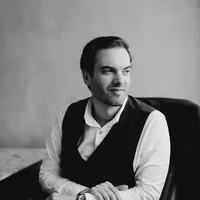
Dr. Thiago Perfeito
CRM-DF 23199 · Aesthetic and Regenerative Medicine
Physician with more than 10 years of practice in aesthetic and regenerative medicine. Master's degree in Aesthetic Medicine (2024). International training at Harvard Medical School and Mayo Clinic. Member of ASLMS, A4M, AMS, and NYAS. Practicing in Brasília, Lago Sul.
Learn about Dr. Thiago →Frequently asked questions about Aesthetic medicine destination comparison
-
Why do international patients choose Brasília over Rio for aesthetics?
The primary reasons are the clinical culture of Brasília's international-facing practices and the city's logistical profile. Brasília's diplomatic patient base — embassy staff, international civil servants, expatriates — has shaped a clinical environment where English-language care, anti-overfilling protocols, and results calibrated to a refined international aesthetic are consistently available. The city also has a substantially lower security friction for a solo international patient during a short recovery window. Neither reason implies that Rio cannot offer equivalent clinical quality — the right practitioner in Rio can deliver the same result. It is an observation about where that clinical culture is the default rather than the exception.
-
What is the difference in clinical approach between the two cities?
Rio's tradition is rooted in the Pitanguy legacy of plastic surgery, with a high concentration of surgeons and a patient culture that includes a visible, beach-oriented aesthetic alongside the founding principle of natural results. Brasília's international niche has developed around conservative, minimally invasive protocols — biostimulators as the primary regenerative tool, energy-based devices for tissue remodeling, conservative volumizers applied anatomically. The anti-overfilling philosophy is more consistently the standard expectation in Brasília's diplomatic-facing practices than in the general clinical market of either city. A well-informed international patient choosing Rio should specifically select a practitioner whose portfolio demonstrates the conservative, natural-result approach — it exists there, but requires more active vetting.
-
Travel logistics: which is easier from the U.S. or EU?
From the continental United States, Rio has more direct connections from major hubs (New York, Miami). Brasília typically requires one domestic connection through São Paulo, adding 2 to 3 hours to the journey. From Europe, the calculus has shifted: TAP Air Portugal now operates Lisbon-Brasília direct, making Brasília accessible with a single connection from most Western European capitals via Lisbon. For travelers routing through Miami or Atlanta, Copa Airlines via Panama City connects efficiently to Brasília with competitive schedules. The total travel differential between the two cities from most North American or European origin points is typically 2 to 4 hours — meaningful but not prohibitive for a medical trip planned in advance.
-
Is Brasília safer than Rio for medical tourism?
Brasília has a categorically different urban security profile from Rio de Janeiro. As a planned federal capital, it is one of the safer large cities in Latin America. Lago Sul — the Brasília neighborhood where Clínica INTI is located — is a residential diplomatic enclave comparable in security profile to an established diplomatic quarter in any world capital. Rio's tourist and clinical areas (Ipanema, Leblon, Barra da Tijuca) are substantially different from the city's higher-risk zones, but the security gap between those areas and a European or North American urban environment is real and requires awareness. For an international patient arriving alone for a procedure with a short recovery window and unfamiliarity with Rio's geography, Brasília's security profile reduces logistical risk in a meaningful and practical way.
-
Price comparison: is aesthetic medicine cheaper in one city than the other?
Procedure costs are largely comparable between the two cities when comparing equivalent clinical tiers. Brazilian aesthetic medicine's price advantage over the United States and Western Europe — typically 40 to 60 percent less for comparable procedures with equivalently trained practitioners — operates across the country, not between cities. A premium injectable session with a high-standard practitioner in Brasília and a premium session in Rio will be priced similarly. The meaningful price variable in Brazil is between clinical tiers: high-volume accessible clinics versus physician-led premium practices. That tier distinction exists in both cities. As a reference point: botulinum toxin full face in a premium Brasília practice runs approximately R$ 1,900-4,000 (USD 375-790); hyaluronic acid filler per syringe R$ 1,900-2,800 (USD 375-555).
Planning a visit to Brasília for aesthetic care?
Dr. Thiago Perfeito (CRM-DF 23199) sees international patients at Clínica INTI, Lago Sul, Brasília. Consultations are available in English. Reach out to discuss your clinical objectives and schedule.